Give Us A Call! : 18004767078
Give Us A Call! : 18004767078

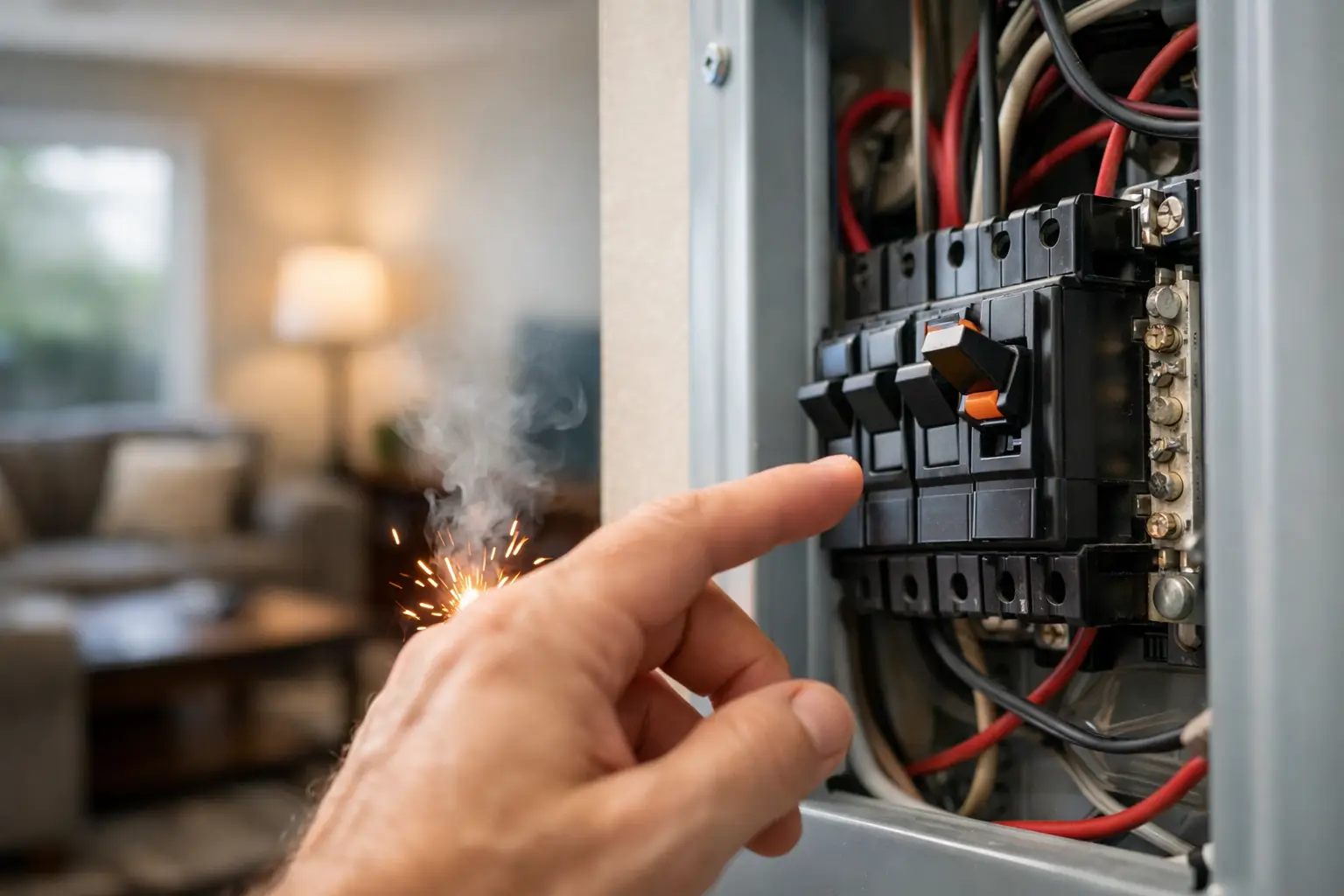
A circuit breaker tripping once after you plug in a space heater may be inconvenient. A breaker that keeps shutting off, smells hot, or trips without anything obvious running deserves attention right away. The breaker is doing its job by cutting power before an overloaded or damaged electrical circuit can create a more serious problem.
For homeowners and landlords in Silver Spring, the goal is not to keep forcing the power back on. It is to find the reason it tripped, handle the simple checks safely, and know when the problem calls for professional repair. A working breaker protects your home, your appliances, and the people inside it.
Your electrical panel is divided into circuits that supply power to different areas and major appliances. Each breaker is designed to shut off when it senses more electrical current than the circuit can safely handle. It may also trip when there is a short circuit, a ground fault, or a problem within the breaker itself.
A single trip does not always mean there is a dangerous wiring issue. Running a microwave, toaster oven, coffee maker, and air fryer on the same kitchen circuit can be enough to overload it. But repeated circuit breaker tripping is not something to ignore, especially in an older home, a rental property with heavily used outlets, or a space that has been renovated over time.
The pattern matters. Does it trip only when one appliance runs? Does it happen during rain? Does one bedroom lose power while the rest of the house is fine? Those details help narrow down the cause and can save time during a repair visit.
Overloading is one of the most common causes. Portable heaters, hair dryers, window air conditioners, vacuum cleaners, microwaves, and power tools draw significant power. Extension cords and power strips can make it easy to plug too much into one circuit without realizing it.
Try moving high-demand appliances to outlets on separate circuits. If the breaker stays on after reducing the load, the circuit may simply be carrying more than it was designed to handle. That said, regularly rearranging appliances is not always a long-term solution. A kitchen, home office, basement workshop, or finished garage may need additional dedicated circuits to match how the space is actually being used.
If the breaker trips every time you use the same toaster, lamp, disposal, washing machine, or other appliance, unplug it and stop using it for now. A damaged internal component, worn cord, or loose plug can trigger a breaker. Check for obvious damage such as cracked insulation, bent prongs, scorch marks, or a plug that feels unusually hot.
Do not keep testing a suspect appliance by repeatedly resetting the breaker. If unplugging it stops the problem, have the appliance repaired or replaced before using it again.
A short circuit occurs when a hot wire contacts a neutral wire or another unintended conductive path. It can cause the breaker to trip immediately and may come with a popping sound, a burnt odor, discolored outlets, or sparks.
Short circuits can occur inside an outlet, switch, light fixture, appliance, or wall wiring. This is not a repair to handle by removing outlet covers and experimenting with wires. Turn off the circuit, leave it off if there are signs of damage, and arrange qualified electrical service.
Ground faults are especially common where water is present, including bathrooms, kitchens, laundry rooms, garages, basements, and outdoor outlets. A ground fault interrupter, commonly called a GFCI, is designed to shut power off very quickly when it detects electricity flowing where it should not.
You may have a GFCI outlet with Test and Reset buttons that has tripped even though the panel breaker looks normal. Before resetting it, make sure the outlet area is dry and that no appliance or cord has been exposed to water. If an outdoor outlet trips after rain or a basement outlet trips near a leak, the moisture source needs attention as well as the electrical issue.
Loose connections can generate heat, and damaged wiring can develop behind walls where you cannot see it. Rodent damage, nails driven into walls, old aluminum wiring, overloaded additions, and wear at outlets or switches can all contribute to a tripping breaker.
The breaker itself can also wear out. If a particular breaker trips with a modest load, will not stay reset after everything on the circuit is unplugged, or feels hot, the panel should be inspected. Replacing a breaker is not a general handyman task for a homeowner. Panel work needs the right training, tools, and safety procedures.
If there is no smoke, burning smell, sparking, buzzing, or visible damage, you can take a few careful steps. Start by turning off lights and unplugging devices on the affected circuit. Pay attention to what was running when the power went out, since that is often the best clue.
At the electrical panel, find the breaker that has moved to the middle position or the off position. Push it fully to OFF first, then firmly back to ON. If it stays on, reconnect devices one at a time. If the breaker trips after a particular device is connected or turned on, leave that item unplugged.
If it trips again right away with everything unplugged, stop resetting it. The issue may be in the fixed wiring, an outlet, a switch, or the breaker. Label the breaker if needed so nobody in the household keeps turning it back on by mistake.
Never hold a breaker in the ON position, tape it in place, replace it with a larger breaker, or open the panel to touch wiring. A larger breaker does not solve an overloaded circuit. It can allow wiring to overheat before the breaker shuts off.
Some situations are clear stop signs. Turn off power to the affected circuit if you can do so safely, keep people away from the area, and seek prompt professional help when you notice any of the following:
If there is an active fire, smoke, or immediate danger, leave the home and call emergency services. Electrical problems can escalate quickly, and waiting for a convenient time is not worth the risk.
The best prevention starts with using circuits as they were intended. Give high-demand appliances room to operate instead of stacking several of them onto one power strip. Use extension cords only temporarily, and replace cords that are frayed, loose, or warm during use.
For landlords and property managers, recurring breaker issues should be documented by unit, room, date, weather conditions, and appliances in use. That record helps identify whether the issue is tenant behavior, an aging appliance, a moisture problem, or a circuit that needs upgrading. It also shows residents that electrical concerns are being taken seriously.
Older Silver Spring homes can have electrical layouts that made sense decades ago but do not match modern daily use. A bedroom once used for a lamp and radio may now support a computer, monitors, chargers, a television, and a portable heater. Adding outlets, dedicated circuits, or properly protected GFCI and AFCI devices may be the safer choice, depending on the home and the source of the problem.
Handyman Services Silver Spring MD can help assess related home maintenance issues, such as damaged drywall around an outlet, water intrusion near an exterior receptacle, or appliance and fixture concerns. When the issue involves electrical-panel work, fixed wiring faults, or new circuit installation, the right next step is a qualified electrical professional.
A breaker that trips is your home asking for attention. Treat that warning with care, keep the affected circuit unloaded, and arrange the right repair before a small interruption becomes a bigger household problem.

Peeling window trim, faded fascia,…

A small puddle around the…

A kitchen can feel worn…

A hard Maryland storm can…

A countertop takes more daily…

Contact Number
18004767078

Email ID
[email protected]