Give Us A Call! : 18004767078
Give Us A Call! : 18004767078

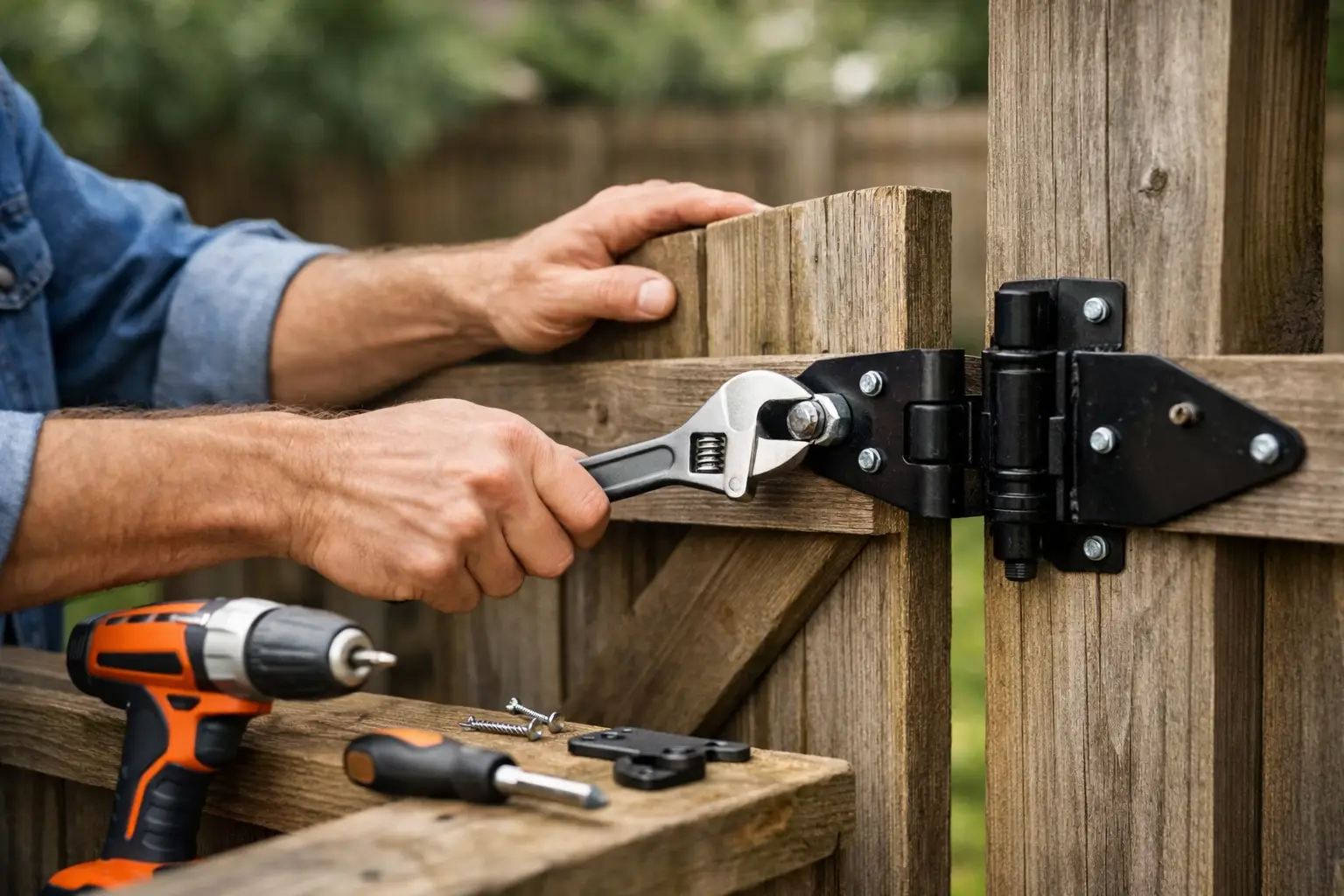
A fence gate that scrapes the ground, will not latch, or hangs at an odd angle can turn a simple trip to the yard into a daily frustration. Knowing how to repair fence gate problems starts with finding the real source of the trouble. A loose hinge may be obvious, but the cause could be a leaning post, rotted wood, swollen boards, or a gate that was too heavy for its hardware from the beginning.
For homeowners and landlords in Silver Spring, Maryland, fence problems also deserve prompt attention for privacy, pet safety, and property security. The good news is that many gate repairs are manageable when the structure is sound. When posts are failing or the gate has extensive rot, a professional repair can prevent a small issue from becoming a full fence replacement.
Open and close the gate slowly and watch where it moves. If the latch side drags along the ground, the gate may be sagging from loose hinges or insufficient bracing. If the entire gate is tilted but the frame is still square, inspect the hinge post. A post that has shifted in the soil can pull the whole gate out of alignment.
Check the hinges, screws, latch, frame joints, pickets, and nearby fence panels. Look closely for cracked boards, rusted hardware, stripped screw holes, soft or darkened wood, and gaps around the post base. Wood fencing in the Silver Spring area is exposed to rain, humidity, freezing temperatures, and summer heat. Those seasonal changes can swell boards, loosen connections, and speed up rot where water sits near the ground.
A quick way to tell whether the gate itself is sagging is to measure both diagonals of its frame. Measure from the top left corner to the bottom right, then from the top right to the bottom left. On a square gate, those measurements should be close. A noticeable difference means the frame has racked out of square and needs bracing or rebuilding.
The exact repair depends on the gate material and the damage, but most wood-gate repairs call for a drill, exterior-rated screws, a level, tape measure, adjustable wrench, hammer, pry bar, wood shims, and safety glasses. A socket set can help with carriage bolts, while a circular saw may be needed if a swollen gate must be trimmed.
Use exterior-rated hardware, not indoor drywall screws. Galvanized or stainless-steel screws and hinges handle moisture much better. If you are replacing a latch or hinges, choose hardware rated for the size and weight of the gate. Heavy gates on light-duty hinges tend to sag again, even after a careful adjustment.
Before working on a gate, support its weight with blocks or a helper. Removing hardware without supporting the gate can split the post, damage the frame, or cause an injury.
Sagging is the most common fence-gate complaint, and it is often repairable without replacing the entire gate. Start with the simplest fix: tighten every hinge screw and bolt. If screws spin freely in a wood post or gate frame, remove them and inspect the holes. Small stripped holes can sometimes be filled with exterior wood filler or glued wood plugs before installing new, longer screws. For a more dependable repair, reposition the hinge slightly and fasten it into solid wood.
If the gate is still solid but droops at the latch side, install an anti-sag gate kit or a diagonal brace. The brace should run from the lower hinge-side corner up to the upper latch-side corner. That direction supports the weight pulling down on the free end of the gate. A cable-and-turnbuckle kit works well for many wood gates because it can be adjusted gradually until the frame returns to square.
Do not simply lift the latch side and add a block underneath it. That may make the gate close temporarily, but it does not correct the strain on the hinges and frame. The goal is to restore a square gate that carries its weight through the hinges and proper bracing.
Hinges can rust, bend, or loosen over time. If they are intact, tightening the bolts and adding washers may bring the gate back into alignment. Check that each hinge is seated flat against the post and gate frame. A hinge twisted by movement can bind and make the gate hard to swing.
Replace hinges that are heavily rusted, cracked, bent, or undersized. When installing new hinges, mark their locations carefully and predrill pilot holes to reduce the chance of splitting the wood. On a heavy driveway or privacy gate, through-bolts with washers and nuts often provide a stronger connection than screws alone.
A gate cannot stay level if its hinge post is loose. Push the post gently in different directions. If it moves in the ground, has visible rot near the base, or leans significantly, adjusting the gate hardware will only be a short-term answer.
Sometimes a minor lean can be corrected by bracing the post, digging around the base, resetting it plumb, and adding new concrete. This works only if the wood is still structurally sound. If a pressure-treated post is soft, split, or decayed at ground level, replacement is usually the safer investment.
Post replacement requires supporting the fence panels and gate, removing the old post, setting a new one at the proper depth, and allowing the concrete to cure before rehanging the gate. The post must be plumb in both directions. Even a small error can leave the gate rubbing, swinging open on its own, or unable to reach the latch.
This is a point where many property owners call for help. Fence posts involve digging, concrete work, carpentry, and careful gate alignment. A dependable repair protects the gate, adjacent panels, and the privacy your fence is meant to provide.
A single cracked picket does not always mean the whole gate is done. Remove damaged boards and replace them with boards of the same thickness and style. Leave appropriate spacing between pickets, especially on wood fences that expand with moisture. Fasten replacement boards with exterior screws so future repairs are easier.
The situation changes when the gate frame is soft, split at the corners, or badly warped. Reinforcing a weakened frame may buy some time, but a new gate frame is often more reliable. Reusing good pickets on a rebuilt frame can help control the cost while giving the gate a straight, stable foundation.
For gates that swell and stick only after rain, check for rubbing marks along the ground, post, and latch side. You may be able to remove a small amount of material from the rubbing edge, then seal the fresh cut. Avoid over-trimming. Wood may shrink again during dry weather, leaving an oversized gap that affects privacy and security.
A gate latch often stops catching because the gate has sagged, not because the latch is broken. Repair the alignment first, then adjust the strike plate or latch catch. Hold the gate in its correct closed position, mark where the latch meets the post, and move the catch as needed.
If the latch is rusted or difficult to operate, replace it with an outdoor-rated model. A self-closing hinge or spring can be useful for side gates that must stay shut for children or pets, but it needs to be matched to the gate weight. Too much spring tension can pull a weak gate out of alignment.
For rental properties, make sure exterior gates can be opened and secured easily without improvised chains, loose hooks, or damaged padlocks. A gate that will not close properly can create an avoidable safety and security concern between tenant visits.
A do-it-yourself fix is a good option when the gate needs new screws, an adjusted latch, a brace, or replacement hinges. Call a professional when the post has shifted, the gate frame is extensively rotted, multiple fence sections are pulling apart, or the repair requires new concrete and structural carpentry.
Professional help is also worthwhile when you need the work completed quickly between tenants, before an inspection, or after storm damage. Handyman Services Silver Spring MD can assess the gate, posts, panels, and hardware together, then recommend a practical repair instead of replacing materials that still have useful life. The team is locally operated, licensed, bonded, and insured, with repair solutions that fit homeowners, landlords, and property managers.
Once the gate is repaired, check the hinges and latch a few times each year. Tighten hardware before it becomes loose, clear soil and mulch away from wood posts, and keep vegetation from trapping moisture against the fence. Reapply stain or sealant as needed to protect exposed wood, especially fresh cuts and repaired areas.
A fence gate should open easily, close securely, and look like it belongs with the rest of the property. Taking care of a dragging or sagging gate now can save you from a larger repair later and help keep your yard private, secure, and ready for everyday use.

A car lockout rarely happens…

A leaning fence can make…

A ceiling fan should make…

A deck can look fine…

A soft board near the…

Contact Number
18004767078

Email ID
[email protected]