Give Us A Call! : 18004767078
Give Us A Call! : 18004767078

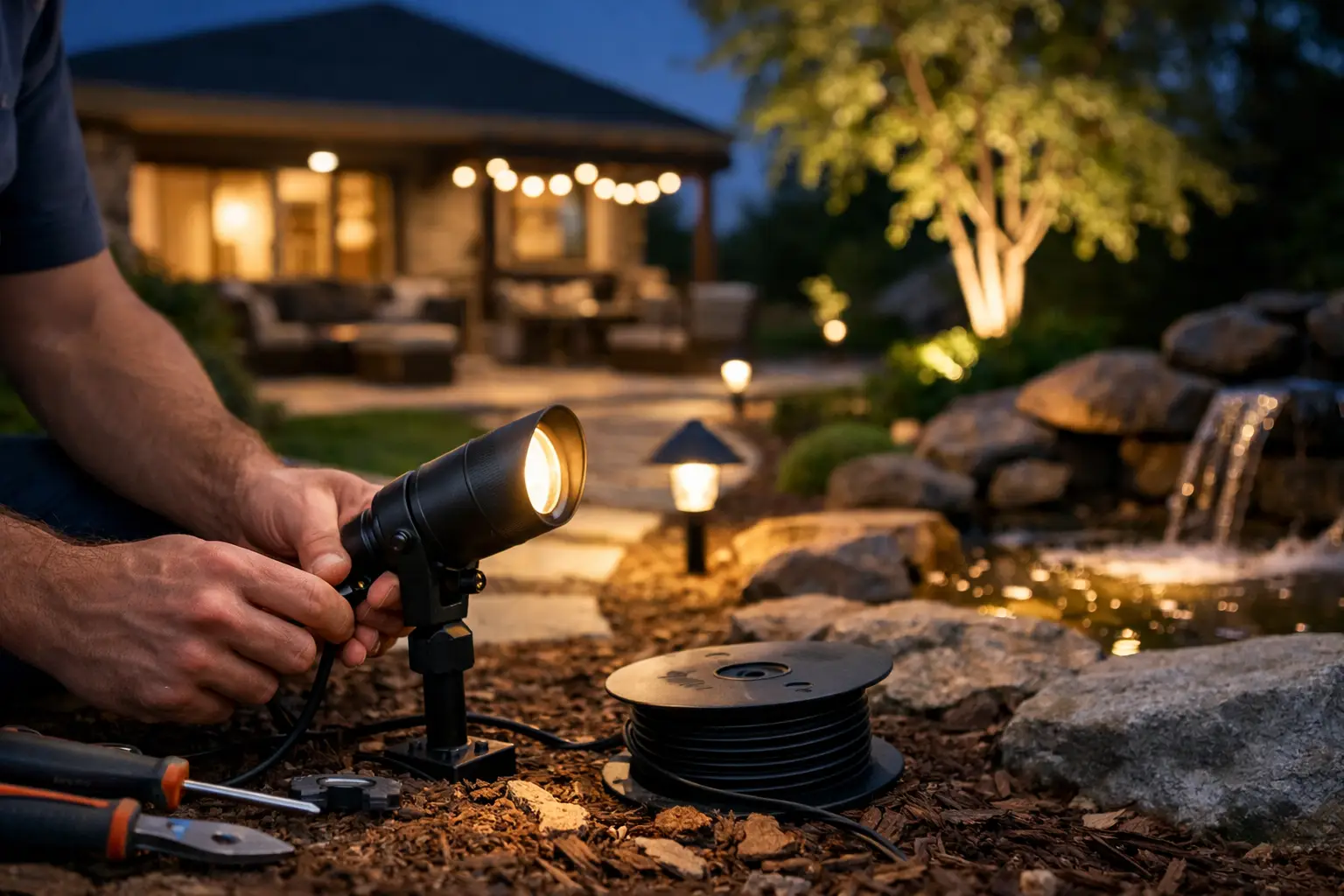
A dark front step, a shadowed side gate, and a driveway with no clear edge can make an otherwise well-kept property feel harder to use after sunset. Thoughtful outdoor lighting installation gives homeowners and landlords in Silver Spring a practical answer: safer footing, more useful outdoor space, and a home that looks cared for when the day is done.
The best results do not come from placing the brightest fixture possible over every door. They come from putting the right amount of light where people walk, park, gather, and need to see clearly. A good plan also accounts for Maryland rain, summer humidity, winter freezes, nearby windows, and the people living next door.
Outdoor lighting serves several jobs at once, but every property needs a different balance. A family that regularly uses its deck may want warmer, lower-level light around stairs and seating areas. A landlord may need reliable lighting at entrances, shared walkways, and rear parking areas. A homeowner with an aging parent may be focused first on eliminating dark steps and uneven paths.
Start by walking the property at night. Notice where you slow down because you cannot see a grade change, where guests hesitate before finding the front door, and where a gate, trash area, or garage entrance disappears into shadow. Those are the places where lighting earns its keep.
Security is part of the picture, but more brightness is not always better. A harsh floodlight can create glare, cast deeper shadows beyond its reach, and shine directly into a neighbor’s window. Controlled lighting aimed downward often provides better visibility and a more comfortable look.
A front-yard lighting plan is usually about arrival and curb appeal. Backyard lighting is more about movement, outdoor dining, pets, grilling, and access to a shed or gate. Treating every area the same can leave the property overlit in one place and inconveniently dark in another.
The front door should be easy to find without turning the entrance into a spotlight. A properly located porch light can illuminate the lock, doorbell, threshold, and the first section of the walk. If visitors, delivery drivers, or emergency responders have trouble identifying your address after dark, illuminated or well-directed light near house numbers is a simple improvement.
For side and rear doors, practicality matters most. These entries are often used for taking out trash, letting in a dog, reaching the garage, or accessing a basement. Motion-activated lighting can work well here, especially when it is adjusted so normal activity triggers it without every passing car setting it off.
Path lights should guide people along a route, not shine into their eyes. Low fixtures placed at consistent intervals can define a sidewalk or garden edge, while step lights make changes in elevation easier to spot. On a long driveway, lighting the entrance, turns, and parking area may be more useful than trying to light the entire length.
Pay attention to existing landscaping. Shrubs that grow into a fixture will block light and make future maintenance harder. Snow, leaves, mulch, and lawn equipment can also affect low fixtures, so placement needs to be practical as well as attractive.
A deck or patio should feel usable, not washed out. Soft lighting on stairs, railings, retaining walls, or nearby planting beds can create enough visibility for guests to move comfortably. A separate brighter task light near a grill, outdoor kitchen, or service door is often helpful.
If you entertain outdoors, consider controls that let you change the mood. Bright light may be useful while setting up dinner, while lower lighting is better once everyone is seated. The right fixture style and bulb color can make a major difference in how relaxing the space feels.
Garages and side yards are common trouble spots because they are used often but receive little natural light at night. A fixture above a garage door, near a service entrance, or at a gate can make unloading groceries and finding keys easier. It also helps property owners notice a loose fence latch, a broken step, or another repair issue before it becomes a bigger problem.
Fixture appearance matters, especially at the front of a home, but it should not be the only decision. Outdoor fixtures need to stand up to moisture, temperature swings, and regular use. Look for equipment rated for the location where it will be installed, whether it is fully exposed to rain or protected under a porch roof.
LED fixtures are a popular choice because they use less energy and usually require fewer bulb changes. However, integrated LED fixtures can be harder to repair if a component fails, while fixtures with replaceable bulbs may offer more flexibility later. The best choice depends on the fixture location, expected use, and how much maintenance you want to handle over time.
Color temperature deserves attention too. Warm white light tends to feel welcoming around front doors, patios, and landscaping. Cooler white light can make a work area or garage entrance feel brighter, but it can look stark on a traditional home. Mixing colors randomly can make a property look pieced together, so it helps to choose a consistent approach.
The power source affects cost, performance, and installation requirements. Low-voltage landscape lighting is a strong option for paths, planting beds, and garden features. It uses a transformer connected to an outdoor electrical source and allows for flexible fixture placement, but the wire runs, transformer size, and connections still need careful planning.
Line-voltage lighting is often used for wall-mounted fixtures, garage lights, and certain security lights. Because this work involves household electrical wiring, weatherproof boxes, grounding, and local code considerations, it may require a qualified professional and permits depending on the scope. This is not the place to take shortcuts with a loose connection or an indoor-rated component.
Solar lights can be useful in small areas with dependable direct sun and modest lighting needs. They are simple to place, but their brightness and runtime can drop during cloudy stretches, shorter winter days, or when leaves shade the panel. They are a convenience option, not always a reliable replacement for wired lighting at a primary entry or safety-critical walkway.
Outdoor equipment works hard in this area. Heavy rain can expose poor connections. Humidity can affect low-quality fixtures. Freeze-thaw cycles may shift soil around path lights, while falling leaves can cover solar panels and block fixture lenses.
Choose corrosion-resistant materials and make sure fixture bases are stable. Landscape wire should be protected where it crosses lawn areas or passes near edging, and connections should be rated for underground outdoor use. Avoid placing lights where a mower, snow shovel, or car tire is likely to strike them.
A quick seasonal check keeps the system looking its best. Clear leaves and mulch away from fixtures, wipe lenses, straighten any lights that have shifted, and replace damaged components promptly. If a breaker trips, a fixture flickers, or water is visible inside a light, stop using that circuit until the issue has been inspected.
A simple solar stake light may be an easy weekend project. Installing a new exterior electrical box, adding a dedicated circuit, wiring a hardwired fixture, or correcting damaged outdoor wiring is different. These jobs require the right tools, safe connections, and an understanding of code requirements.
Professional help also makes sense when lighting work connects with other property needs. A new deck may need stair lighting before the railing is finished. A fence repair may be the right time to add light near a gate. A cracked walkway, loose handrail, or aging exterior outlet can affect how well the final lighting plan works.
Handyman Services Silver Spring MD can help property owners coordinate practical exterior improvements, from fixture mounting and deck or fence repairs to the supporting maintenance work that makes an outdoor area safer and more useful. For electrical work that requires specialized licensing or permitting, the right qualified trade professional should handle the job.
Before buying fixtures, ask what you need to be able to do outside after dark. Do you need to see the lock at the side door? Keep guests steady on patio steps? Make a rental property’s entrance easier to navigate? Put the light where it solves that real problem, and your property will feel safer, more welcoming, and easier to enjoy every evening.

A car lockout rarely happens…

A leaning fence can make…

A ceiling fan should make…

A deck can look fine…

A soft board near the…

Contact Number
18004767078

Email ID
[email protected]