Give Us A Call! : 18004767078
Give Us A Call! : 18004767078

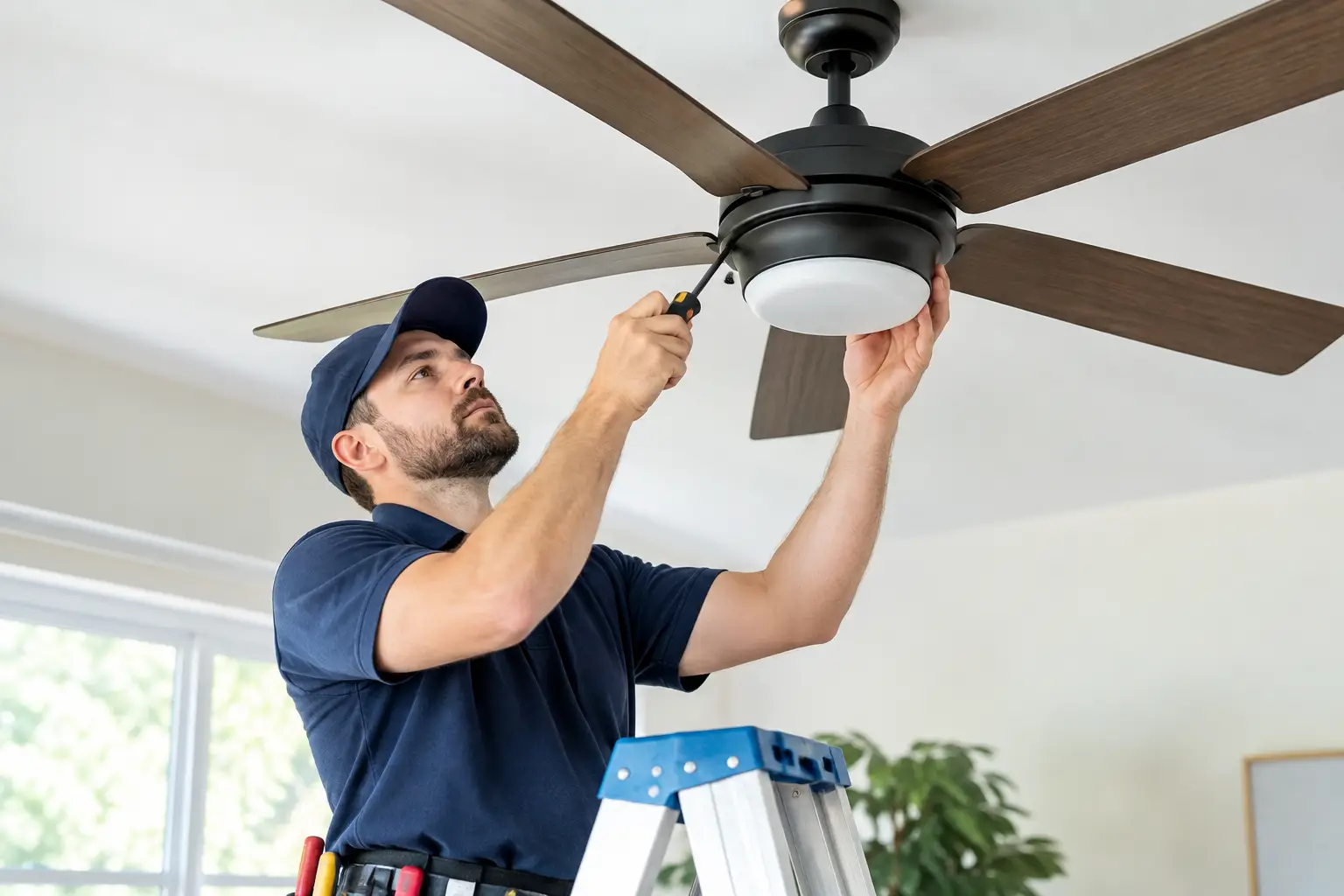
A ceiling fan should make a room more comfortable, not leave you wondering why it wobbles, hums, or shuts off the breaker. So, can handymen install ceiling fans? In many cases, yes. A qualified handyman can assemble and mount a fan, replace an existing fixture, install the proper support box, and make straightforward connections. The right answer depends on the wiring already in place, the weight of the fan, local requirements, and whether the job involves new electrical work.
For homeowners and landlords in Silver Spring, the safest approach is to look at the full job before anyone starts. Replacing a light fixture with a standard ceiling fan is very different from adding a fan where there has never been a ceiling box, switch, or circuit.
A handyman is often a good fit when the fan is replacing an existing ceiling light or old fan and the wiring is in good condition. The work may include removing the old fixture, checking the electrical box, installing a fan-rated brace or box if needed, assembling the fan, connecting the wires, balancing the blades, and testing the controls.
This type of job still calls for care. Ceiling fans are heavier and create more movement than most light fixtures. A box that safely held a small light may not be rated to support a fan. Mounting a fan to the wrong box, drywall alone, or a weak brace can lead to wobbling, damaged ceilings, or a fan that eventually pulls loose.
An experienced handyman should inspect the mounting point rather than simply use the box that is already there. If the existing support is not fan-rated, it needs to be replaced or reinforced with an approved support system secured to the framing.
Some ceiling fan projects move beyond routine handyman work. If a room has no overhead fixture, the installer may need to run a new cable through walls or ceilings, add a switch, extend a circuit, or troubleshoot older wiring. Those tasks can require a licensed electrician and, depending on the scope, a permit and inspection.
Call for electrical expertise when you notice aluminum wiring, cloth-covered wiring, burn marks, a hot switch plate, frequent breaker trips, loose connections, or a ceiling box that cannot be safely accessed. The same applies when a new fan will be installed in a bathroom, outdoors, or another damp location. Those areas may require equipment rated for moisture and wiring methods that meet current code.
Older Silver Spring homes can have surprises behind the ceiling. A fixture may be connected to wiring that has been modified over the years, or the switch may not have the conductors needed for a separate fan and light control. A professional should not guess around these conditions. Identifying the problem first protects the property and helps avoid a second service call later.
A proper installation is more than hanging a fan and turning the power back on. The installer should shut off the circuit at the breaker, confirm the power is off, and inspect the wiring and box before disconnecting anything. The fan must be mounted to a fan-rated box or brace that can carry its weight and movement.
The electrical connections should be secure, enclosed in the electrical box, and matched correctly for the fan motor, light kit, ground, and controls. Once installed, the fan should run at each speed without shaking, clicking, scraping, or making an unusual electrical smell. The blades should clear nearby walls, cabinets, doors, and sprinkler heads.
Ceiling height matters, too. A fan that hangs too low can be a safety issue, particularly in bedrooms, hallways, basements, or rooms with low ceilings. Flush-mount fans and appropriate downrods help place the blades at a practical height. In a vaulted ceiling, the mounting angle and downrod length may need special attention.
Choosing the right fan before the appointment can make the installation smoother. Fan size should match the room. A small fan may not move enough air in a large family room, while an oversized model can look crowded in a compact bedroom. The manufacturer’s mounting instructions and weight specifications also matter because they tell the installer what support is required.
Remote-controlled fans are convenient, but they can create an extra planning step. Some models need a receiver tucked into the canopy, and tight ceiling boxes do not always leave much room. Wall-control models may need compatible wiring and switches. If you want the fan and light controlled independently from the wall, mention that before the work is scheduled.
For rental properties, consistency is useful. Installing comparable fans and controls across similar units can make future repairs simpler. It also gives tenants clear expectations about batteries for remotes, pull chains, and which switch controls the fixture.
A few quick questions help determine whether your project is a standard installation or an electrical upgrade. Is there already a functioning light or fan at the location? Does the existing box support a ceiling fan? Are you keeping the same switch setup, or do you want separate controls? Is the fan being installed indoors, outside, or in a bathroom? And has the circuit shown any signs of trouble?
It is also helpful to have the fan on site before the appointment. Keep the box, hardware, downrod options, remote, and instructions together. If the fan has been opened already, make sure no mounting parts or blade screws are missing. A dependable service professional can handle many small issues, but a missing bracket or receiver can delay completion.
If you are unsure about the box or wiring, do not remove the old fixture yourself just to check. Working around energized wires creates an unnecessary risk. Take a photo of the fixture and ceiling area from the floor if possible, then describe the room, ceiling height, and control setup when requesting service.
Ceiling fan installation can look simple from the floor, which is why it is tempting to choose based on price alone. But the quality of the mounting and electrical connections is what determines whether the fan stays quiet, stable, and safe over time. A low quote that does not include checking the support box may leave you paying for a correction later.
Ask what the service includes. A clear estimate should distinguish between replacing an existing fan, installing a fan-rated box, repairing drywall around the opening, adding a switch, or running new wiring. These are different jobs with different time, materials, and skill requirements.
Handyman Services Silver Spring MD approaches ceiling fan work as part of the whole repair picture. If the ceiling needs patching, the switch plate is loose, the room needs painting after an old fixture is removed, or other household repairs have been waiting, handling those items in one visit can save time and reduce the hassle of coordinating multiple appointments.
A ceiling fan is a practical upgrade for bedrooms, living rooms, porches, and rental units, but it needs the right support and the right level of electrical expertise. A capable handyman can be an excellent choice for a straightforward replacement and related repairs. When new circuits, damaged wiring, or code-sensitive conditions are involved, bringing in a licensed electrician is the responsible next step.
Before you buy a fan or schedule service, take a close look at what is already on the ceiling. A little planning helps turn a small home improvement project into a reliable, comfortable upgrade that works the way it should.

A countertop takes more daily…

A single cracked bathroom tile…

A garage is often where…

A light that flickers every…

A kitchen can look dated…

Contact Number
18004767078

Email ID
[email protected]