Give Us A Call! : 18004767078
Give Us A Call! : 18004767078

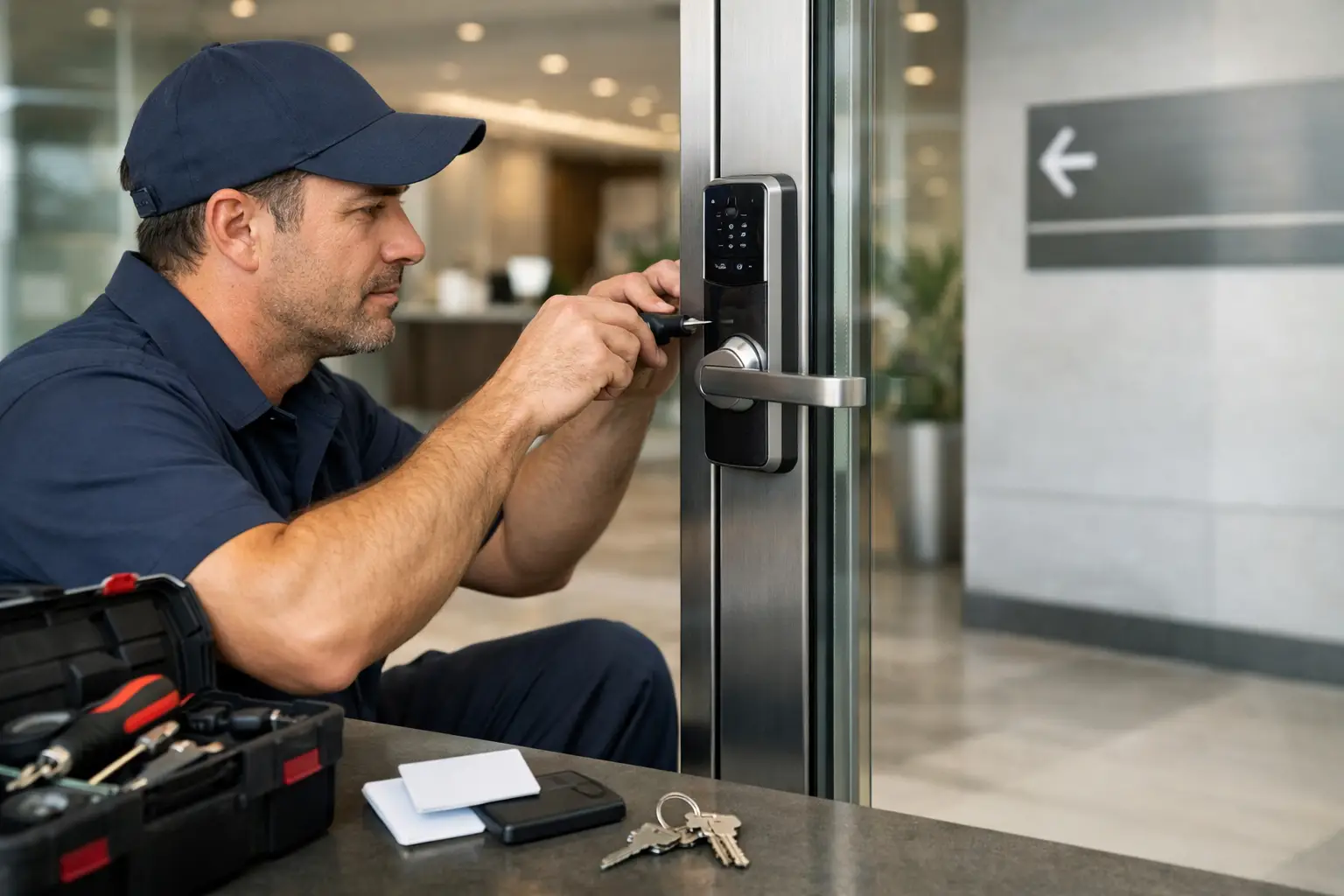
A front-door lock that sticks at opening time, a former employee who may still have a key, or an office suite with too many copies in circulation can turn into a security problem quickly. Commercial office lock installation is not just about replacing hardware. It is about giving the right people dependable access while protecting your staff, equipment, files, and daily operations.
For a small office, medical practice, retail back office, rental-property office, or professional suite in the Silver Spring area, the right answer depends on the door, the traffic level, and how your team works. A practical lock setup should be secure without making the first person in and last person out fight with the door every day.
Before choosing a new lock, look at what is actually happening at the entrance. Is this the main employee entrance, a private office, a supply room, a rear exit, or a door that customers use throughout the day? A lock that works well on a lightly used interior office door may not be the right fit for a busy exterior entrance.
The condition of the door matters just as much as the lock. A sagging metal door, a worn frame, loose hinges, or a misaligned strike plate can make a brand-new lock feel unreliable. People often blame the key or lock cylinder when the real issue is that the latch is not lining up with the frame.
That is why professional installation should include checking the full opening. The installer should confirm that the door closes properly, the latch engages cleanly, the frame is secure, and the hardware is appropriate for the door material. A good lock cannot compensate for a damaged door or weak frame.
There is no single best lock for every workplace. The goal is to match the hardware to the level of access control you need without spending money on features your office will not use.
A keyed deadbolt may be a sensible choice for a low-traffic private office or storage area when the door already has a functioning passage lever. For a main commercial entrance, a commercial-grade lever set with a deadbolt or a heavy-duty cylindrical lock is often a better match because it is built for repeated use.
Keypad locks can be helpful when several employees need access and you want to avoid handing out multiple physical keys. If someone leaves the company, the code can be changed without rekeying the entire lock. The trade-off is that codes must be managed carefully. A code written on a desk note, shared too widely, or never changed defeats the benefit.
Electronic access systems can offer more control for offices with larger teams, multiple doors, or changing staff schedules. Depending on the system, managers may be able to assign access by credential, remove access quickly, and review entry activity. These systems can be useful, but they require compatible hardware, dependable power or batteries, and a clear plan for administration.
For many small businesses, a well-installed commercial lever and controlled key system provide the right balance of value and security. The best choice depends on the building, budget, and who needs access after hours.
A lock change is a good time to get control of your keys. Many offices discover they do not know how many copies exist until an employee departs, a tenant moves out, or a key is lost.
Rekeying lets you keep compatible lock hardware while changing the internal pins so old keys no longer work. It can be an efficient option when the existing locks are in good condition but key security has become uncertain. Replacing the lock makes more sense when the hardware is worn, damaged, low quality, or not suited to commercial use.
Keep a simple record of who has keys, what doors they open, and when they were issued. For small teams, this may be a straightforward key log. For larger offices, a restricted keyway or electronic credential system may offer better control. The point is not to make access difficult for trusted employees. It is to avoid guessing who can enter your office after a staffing change.
A strong lock is only one part of an office entry system. The strike plate, screws, door frame, hinges, closers, and glass near the door all affect security. A deadbolt installed into a weak strike plate with short screws does not provide the same protection as hardware properly anchored into the frame.
Exterior doors should also be checked for gaps, loose weatherstripping, damaged thresholds, and signs of forced entry. These conditions can affect both security and energy efficiency. If the door has been kicked, pried, or repeatedly slammed, the frame may need repair before new hardware is installed.
Do not overlook emergency egress. Doors that serve as required exits must allow people to leave safely and quickly. Installing a lock that creates a barrier during an emergency can create a serious safety issue and may not meet building requirements. The right commercial hardware protects the entrance while keeping exit paths usable.
Interior doors deserve attention too. File rooms, IT closets, medicine storage, maintenance rooms, and offices containing sensitive records may need different access rules than common work areas. Rather than giving every person a master key, consider separating access based on job needs.
Some office lock concerns can wait for a scheduled service visit. Others should be handled promptly. If you have had a break-in, attempted forced entry, lost master keys, terminated an employee with key access, or experienced a lock failure that leaves the office unsecured, it is wise to act right away.
Signs of trouble include a key that turns only after repeated effort, a latch that does not catch, a lever that feels loose, a deadbolt that will not extend fully, or a door that has to be pushed or lifted to lock. These problems rarely improve on their own. Waiting can leave employees locked out, prevent a door from securing at closing time, or cause the hardware to fail during a busy workday.
For urgent lockouts or a damaged office entry, a responsive locksmith can help regain access, secure the opening, and recommend the appropriate repair or replacement. When the situation is not urgent, scheduling the work at a quieter time can reduce disruption for staff and customers.
Office moves and tenant turnovers are an ideal time to review every exterior door, interior lock, mailbox, cabinet lock, and storage-room key. New occupants often inherit old hardware with an unclear key history. Rekeying or replacing locks before opening day creates a clean starting point.
Property managers can also benefit from treating locks as part of routine maintenance rather than an afterthought. Doors get out of alignment, closers wear down, and employee access changes. Checking hardware during regular property visits can prevent a small adjustment from becoming an after-hours emergency.
Handyman Services Silver Spring MD can help business owners and property managers with office lock installation, rekeying, lock repair, door alignment concerns, and related property repairs. Having one local team available for security hardware and practical door repairs can save time when the problem is not limited to the lock itself.
A professional visit should begin with a conversation about the door and how your office uses it. You should be able to explain who needs access, whether employees come and go at different times, and whether you need separate keys for different rooms.
The work itself should include correct measurements, careful fitting of the lock and strike, testing from both sides of the door, and confirmation that the door latches and locks without excessive force. If electronic hardware is being installed, the technician should verify that codes, credentials, batteries, and backup entry options are understood before leaving.
Ask what maintenance the lock will need. Some hardware benefits from periodic tightening, alignment checks, battery changes, or light lubrication approved for locks. Avoid forcing a sticky key or using the wrong oil inside a cylinder, since that can attract dirt and create more problems.
The best office lock arrangement is the one your staff can use confidently every day, while giving you clear control when circumstances change. If a door is sticking, keys are unaccounted for, or your current hardware no longer fits the way your business operates, addressing it now can make tomorrow’s opening and closing routine much easier.

A countertop takes more daily…

A single cracked bathroom tile…

A garage is often where…

A light that flickers every…

A kitchen can look dated…

Contact Number
18004767078

Email ID
[email protected]