Give Us A Call! : 18004767078
Give Us A Call! : 18004767078

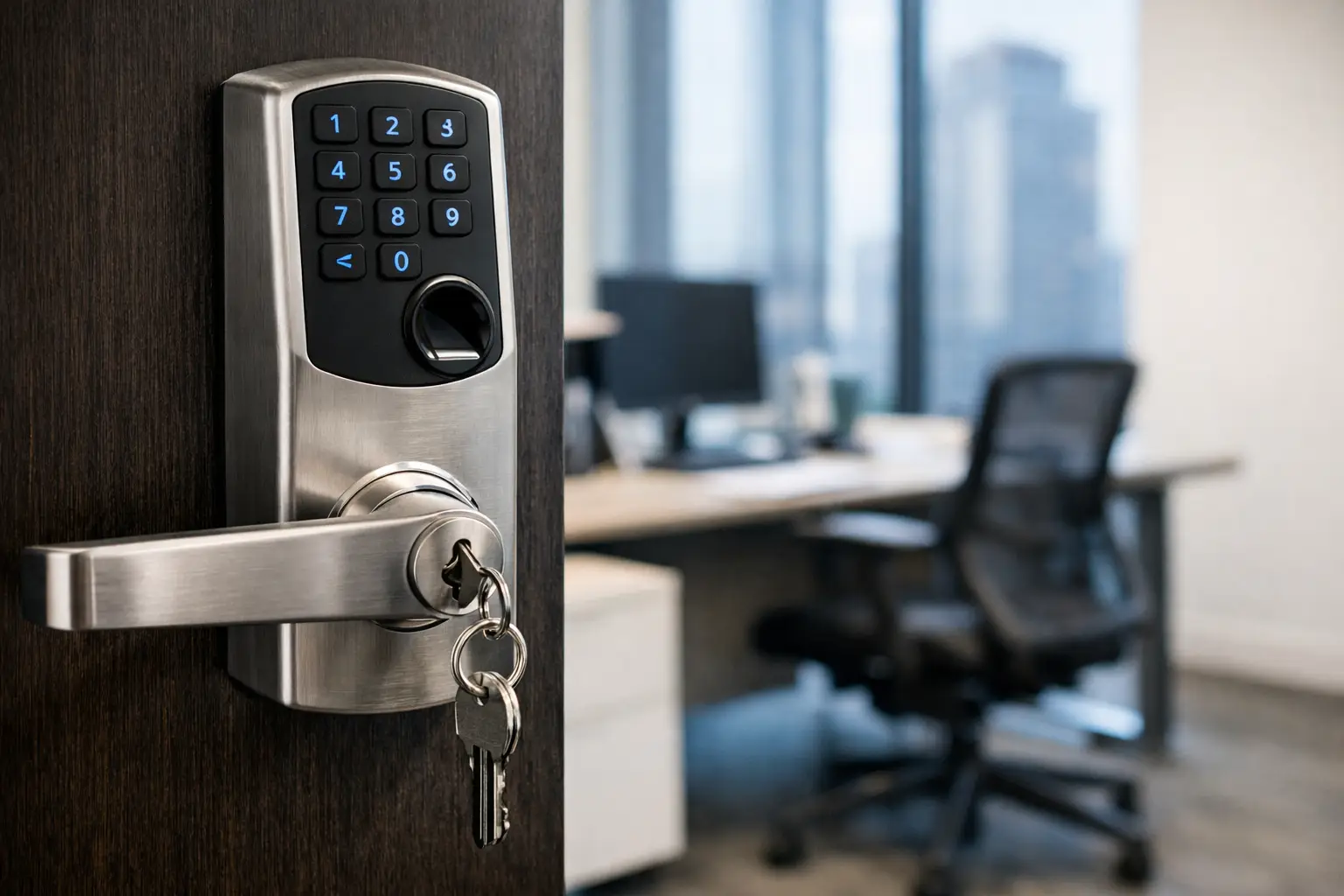
A missing office key, a door that does not latch, or a former employee who still has access can turn into a serious problem after business hours. Commercial office lock security is not just about putting a heavy lock on the front door. It is about knowing who can enter, when they can enter, and whether every exterior and interior door will do its job when it matters.
For Silver Spring business owners, landlords, and property managers, the right security plan should fit the building, the staff, and the daily routine. A small professional office has different needs than a medical practice, retail space, warehouse, or multi-tenant commercial property. The goal is practical protection without making daily access frustrating for the people who need to get work done.
The front entrance gets most of the attention, but it is rarely the only way into a commercial space. Rear service doors, side entrances, connecting suite doors, storage rooms, utility rooms, and garage access can all create weak points. A secure front lock cannot compensate for a rear door with a loose strike plate or a closable door that never fully latches.
Walk the property as someone trying to get in without permission. Check whether each exterior door closes and locks on its own. Look for gaps around the frame, damaged hinges, weak door closers, cracked glass near thumb-turn locks, and hardware that has been forced or repaired poorly in the past. These details matter because a lock is only as dependable as the door and frame holding it.
Older commercial doors often need more than a replacement cylinder. The frame may be misaligned, the door closer may be slamming the door, or the latch may not line up with the strike. Repairing those issues protects the lock, prevents lockouts, and helps staff avoid the habit of leaving a troublesome door propped open.
There is no one lock setup that suits every office. A single-entry office with a small, stable team may do well with quality commercial-grade deadbolts or lever locks and a controlled key system. A business with turnover, contractors, multiple shifts, or sensitive files may be better served by electronic access control.
Traditional keyed locks are familiar, affordable, and dependable when maintained. Their downside is key control. If a key is copied without authorization or never returned, the business may not know until there is a problem. Rekeying after staff changes is often less expensive than replacing all lock hardware, provided the existing locks are in good condition.
Electronic keypad locks allow a manager to change a code instead of collecting every key. They can be useful for staff entrances, supply rooms, and offices with rotating employees. However, codes need to be changed when people leave, and shared codes can quickly become common knowledge if they are not managed carefully.
Card, fob, and mobile credential systems provide more control for larger offices or properties with many users. They can allow access by person, time of day, or door location. A lost fob can be removed from the system without changing the physical lock. The trade-off is higher upfront cost, ongoing system management, and the need for a backup plan if power, batteries, or software access fail.
For areas holding cash, equipment, client records, medication, or private data, consider layers of protection. That may include a secured exterior entrance, a separate lock on a records room, monitored alarm coverage, and a clear access policy. Security works best when a single mistake does not give someone access to everything.
Office locks must protect the property without trapping people inside. Exit doors, panic bars, fire-rated doors, and emergency egress hardware have specific requirements. A lock installation that seems sensible from the outside can create a dangerous condition if people cannot leave quickly in an emergency.
This is one reason commercial work should be handled carefully. The right hardware depends on the door type, occupancy, building layout, and applicable code requirements. If an exit device sticks, a closer fails, or a door has been modified, have it inspected and repaired rather than relying on a temporary workaround.
Many commercial security problems begin with an innocent question: Who has the key to the back door? If no one can answer confidently, the lock system is no longer under control.
Keep a simple, current record of issued keys, fobs, cards, and keypad users. It does not need to be complicated. The record should identify the person, the access provided, the date issued, and the date returned or removed. Avoid leaving master keys in an unlocked desk, shared lockbox, or labeled key cabinet near the entrance.
A master key system can be very helpful in offices with multiple rooms or tenants. It allows authorized managers to access necessary areas while limiting everyday keys to certain doors. The planning matters. Give employees only the access they need for their job, and avoid creating too many copies of high-level keys.
When an employee, tenant, cleaner, vendor, or contractor no longer needs access, remove it promptly. For electronic systems, deactivate the credential the same day. For keyed systems, collect the key whenever possible and consider rekeying when keys cannot be accounted for. This is especially worth doing after a turnover, a disputed separation, a lost keyring, or a break-in.
A lock does not have to be completely broken to create a security concern. A stiff key, loose lever, spinning cylinder, delayed latch, damaged strike plate, or door that must be pushed hard to lock is telling you something needs attention.
Sometimes a straightforward repair restores safe operation. Tightening hardware, adjusting the strike, repairing the door closer, replacing a worn latch, or rekeying a cylinder may solve the problem. In other cases, replacement makes more sense because the hardware is low-grade, badly worn, outdated, or no longer matches the access plan.
Do not wait until the door fails at closing time. Emergency lockouts and after-hours repairs cost more than a scheduled visit, and they create stress for staff who may be left standing outside or unable to secure the building. Regular attention also helps identify related repair needs, such as damaged trim, loose hinges, drywall damage around a frame, or a door that needs carpentry adjustment.
Commercial office lock security is easier to maintain when it becomes part of normal property upkeep. Review access after staffing changes, inspect exterior doors periodically, and test that each door closes, latches, and locks as intended. Ask employees to report problems early instead of accepting a sticky door or unreliable key as normal.
For a multi-tenant building or busy office, assign one person to own the access record and another to serve as backup. Decide who can authorize new keys, code changes, and lock work. That avoids confusion when an urgent request comes from someone who is not authorized to make security changes.
It also helps to plan for the unexpected. Keep current contact information for approved decision-makers, identify who can authorize emergency entry, and make sure the business has a safe way to handle a lockout without leaving doors unsecured. Handyman Services Silver Spring MD can assist with commercial lock repair, rekeying, new lock installation, door hardware issues, and urgent locksmith needs when a problem cannot wait.
You do not need to replace every lock at once to make meaningful improvements. Start with the doors that protect the building after hours, the rooms that hold sensitive items, and the keys or codes that are no longer accounted for. Then fix the issues that make staff work around the security system instead of using it.
A commercial office should feel welcoming to employees and clients, not difficult to enter or leave. With properly working doors, sensible access rules, and prompt repairs when something starts to fail, security becomes a dependable part of how the property runs each day.

A countertop takes more daily…

A single cracked bathroom tile…

A garage is often where…

A light that flickers every…

A kitchen can look dated…

Contact Number
18004767078

Email ID
[email protected]