Give Us A Call! : 18004767078
Give Us A Call! : 18004767078

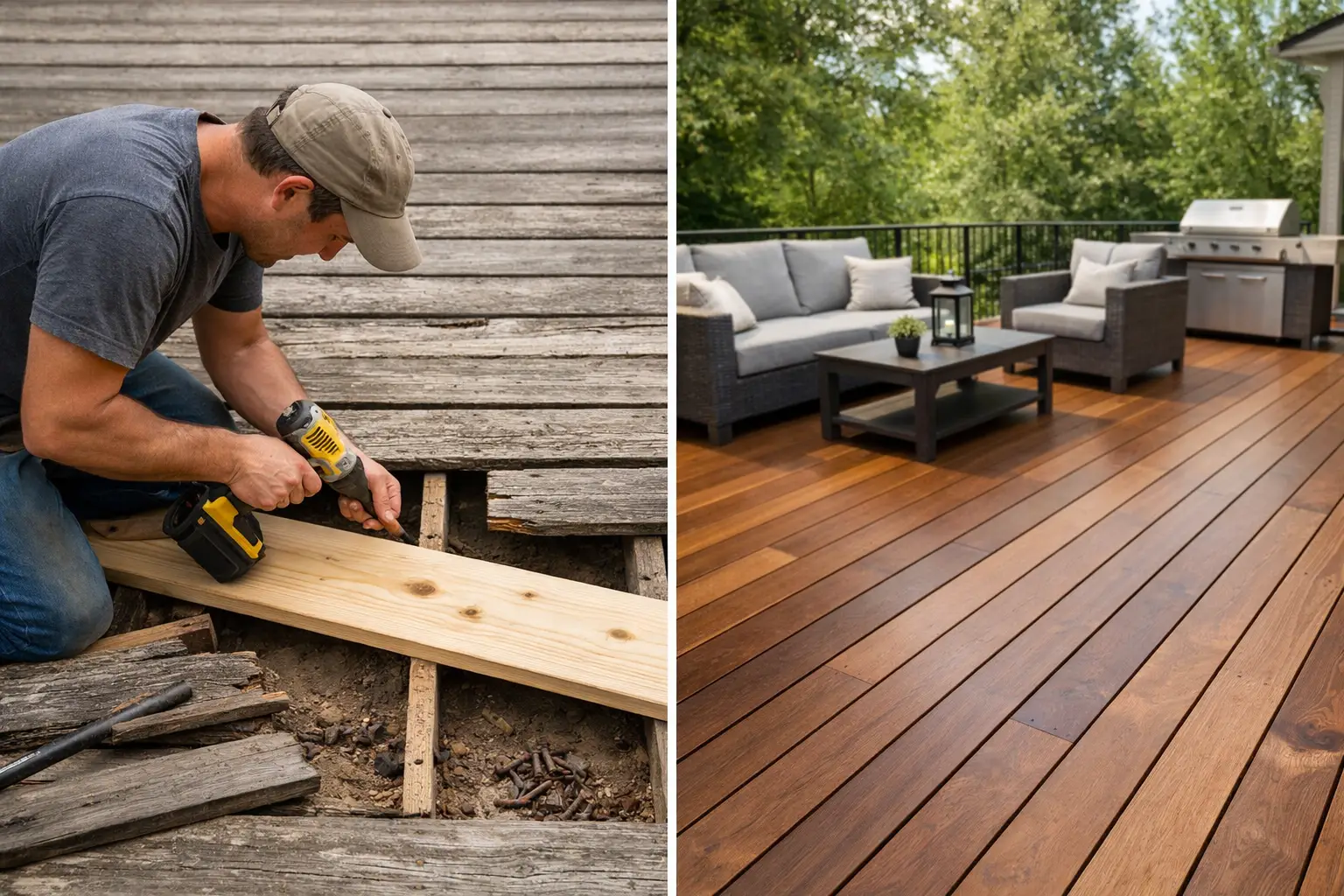
A soft board near the stairs, loose railings, peeling surfaces, or a post that has started to lean can turn a favorite outdoor space into a question mark. When considering deck repair versus replacement, the right answer is not always the least expensive option today. It is the option that makes the deck safe, useful, and worth maintaining for the years ahead.
For homeowners and landlords in Silver Spring, weather, moisture, shade, and everyday use all take a toll on exterior wood. A close inspection helps separate a deck with a few fixable issues from one with structural problems hiding below the surface.
A faded deck can often be cleaned, repaired, and refinished. A deck with weak framing or deteriorated support posts needs much more careful attention. Cosmetic wear is frustrating, but it is rarely the reason to replace an entire deck. Safety concerns are different.
Pay close attention to movement. If the deck feels bouncy when people walk across it, if railings wobble, or if stairs shift underfoot, do not treat those signs as normal aging. The ledger board, which connects the deck to the house, must also be secure and properly flashed. Problems in that area can allow water behind the siding and affect both the deck and the home.
Look underneath when possible. Check the posts, beams, joists, fasteners, and connections to the house. Wood that is soft, deeply cracked, split around hardware, or damaged by insects may no longer carry weight safely. A professional inspection is especially helpful when damage is hard to see from the deck surface.
Repair is often the practical choice when the deck’s main structure is sound. Replacing a few worn boards, tightening railing connections, rebuilding steps, or correcting minor drainage issues can extend the life of a well-built deck without the cost and disruption of a full rebuild.
For example, boards closest to planters, grills, downspouts, or heavily shaded areas may rot sooner than the rest of the deck. If the joists beneath them remain solid, those individual boards can usually be replaced. The same is true for a damaged handrail section or several loose balusters.
Repairs may be a good fit when:
A targeted repair can also make sense for a rental property between tenants. A landlord may need safe stairs, secure railings, and replacement boards now, while planning a larger outdoor update later. The key is not to patch over a problem that has already reached the framing.
Replacement becomes the wiser choice when repairs would only address symptoms. If rot or decay appears in several structural areas, replacing boards one at a time can become an expensive cycle with no lasting benefit. The deck may look better for a while, but its foundation is still compromised.
A full replacement is worth discussing if multiple posts are deteriorated, joists show widespread rot, hardware is severely corroded, or the deck has been repaired repeatedly over the years. Extensive insect damage, poor original construction, and an undersized or outdated layout can also change the calculation.
Age alone does not automatically mean a deck needs to be replaced. A well-maintained deck can last a long time. However, an older deck with years of deferred maintenance deserves a more thorough assessment before more money is put into spot repairs.
Replacement is also an opportunity to solve problems that repairs cannot fix. Maybe the deck is too small for family gatherings, the stairs land in an awkward spot, or the railing style blocks a view of the yard. Rebuilding allows you to improve the layout, update materials, and plan for better drainage and easier maintenance.
The lowest initial price is not always the lowest cost over time. A small repair can be a smart, affordable solution when it restores a sound deck. But when the same deck needs new boards this season, railing work next season, and structural corrections after that, replacement may be the better value.
Think about the remaining service life of the existing structure. If the framing is near the end of its usable life, installing premium new deck boards over weak joists is usually not money well spent. On the other hand, solid framing may support a resurfacing project that gives the deck a fresh look without starting from scratch.
It also helps to factor in the cost of inconvenience. A repair may take less time and allow you to keep using most of the area. A replacement is more disruptive, but it can eliminate recurring maintenance and provide a more dependable space for years. For landlords, a documented repair or rebuild plan can also help avoid last-minute safety calls from tenants.
The material on top of your deck affects how often you will need maintenance, but it does not replace the need for a sound structure underneath. Pressure-treated lumber remains a common choice because it is economical and repairable. It still needs routine care, including cleaning, sealing or staining when appropriate, and prompt replacement of damaged pieces.
Composite decking can reduce routine surface maintenance and resist many moisture-related issues. It can be a good option during a rebuild or resurfacing project, especially for homeowners who want less sanding and staining. Yet composite boards are installed over a framing system, and that framing must be in good condition. Covering rot with new surface material is never a solution.
Railings, stairs, lighting, and built-in seating should be considered at the same time. If the deck is being rebuilt, coordinating these details early often produces a cleaner result than adding them later. If you are repairing, the goal may be simpler: make the existing design safe, stable, and presentable.
Many deck problems begin with water moving in the wrong direction. A downspout that empties beside a post, soil piled against wood, or poor airflow beneath the deck can keep moisture trapped where it does the most damage. Shade from mature trees can make drying even slower in parts of Silver Spring.
Before deciding on repairs, identify why the damage happened. Replacing a rotted post without correcting the drainage issue may only delay the same repair. Improvements could include redirecting downspouts, adjusting grading, clearing debris from between boards, or creating better space for air to move beneath the deck.
Regular maintenance matters, too. Sweep leaves and dirt from the surface, inspect fasteners and railings each spring, and check the underside after long wet periods. Small issues are easier to correct before they affect framing or create a safety concern.
A useful deck evaluation should explain what is damaged, what is still sound, and what work is recommended now versus later. Ask whether the problem is limited to surface boards or reaches the posts, joists, beams, or ledger connection. You should also understand whether replacement materials will match the remaining deck and how the repair will address the source of water damage.
Handyman Services Silver Spring MD can help homeowners and property owners assess common deck concerns, from loose boards and worn stairs to railing repairs and larger deck improvement projects. A local, professional assessment can give you a practical scope of work instead of leaving you to guess from what is visible on top.
If a deck has begun to feel unsafe, keep people off the affected area until it is checked. If it is still structurally sound, timely repair can protect your budget and preserve the outdoor space you enjoy. If replacement is the safer path, moving forward before a failure gives you more control over the design, schedule, and final result.

A single cracked bathroom tile…

A garage is often where…

A light that flickers every…

A kitchen can look dated…

A commercial door can look…

Contact Number
18004767078

Email ID
[email protected]