Give Us A Call! : 18004767078
Give Us A Call! : 18004767078
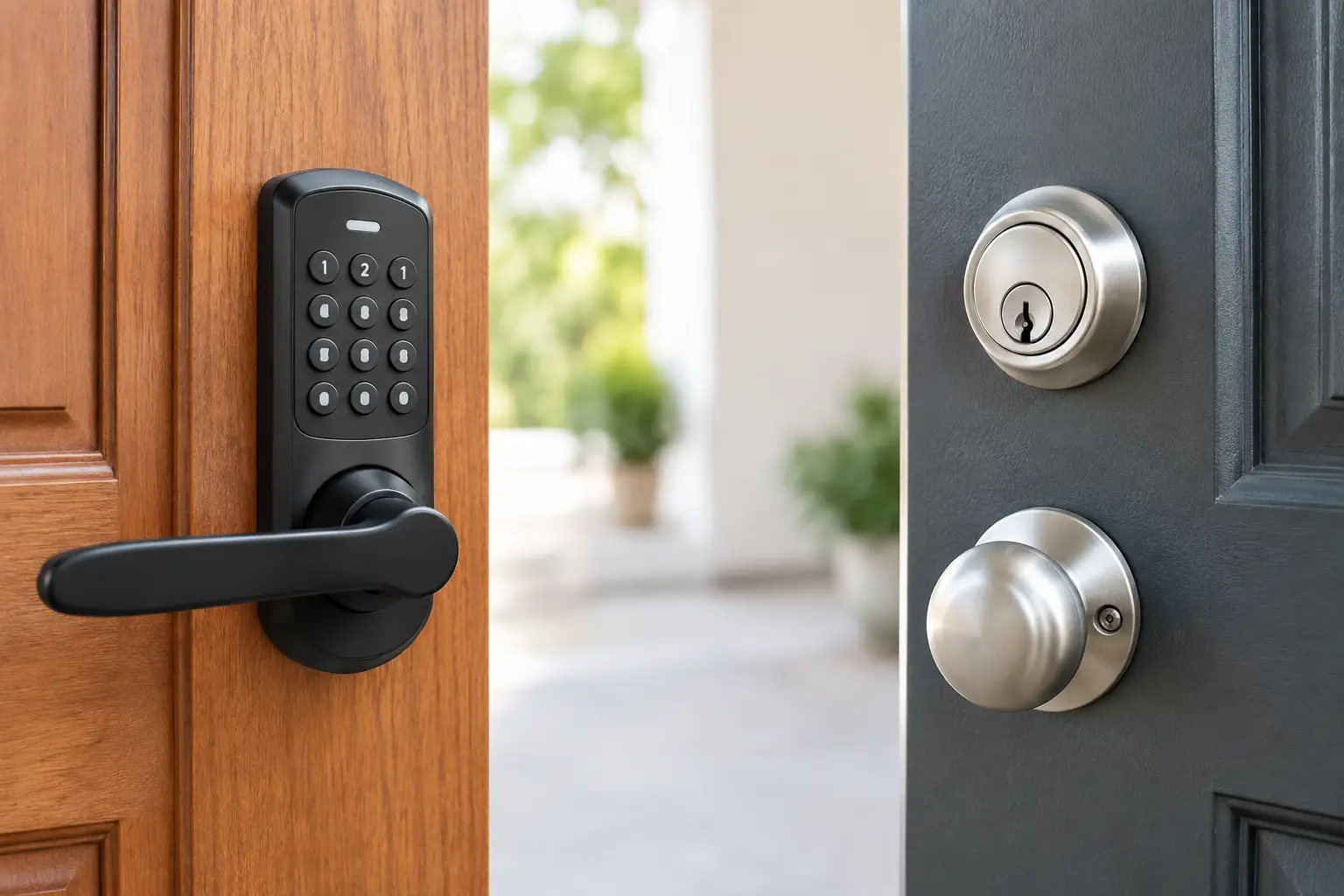
A front-door key that gets misplaced during a busy morning can quickly become a bigger problem than it should be. When comparing keypad versus deadbolt locks, the right choice comes down to how your household, rental property, or business actually uses the door. Convenience matters, but so do door strength, reliable access, and knowing who can get inside.
For many Silver Spring homeowners, the best answer is not strictly one or the other. A keypad lock often includes a deadbolt mechanism, while a traditional deadbolt uses a physical key. The more useful question is whether you want keyless entry, a keyed lock, or a combination that gives you both.
A traditional deadbolt is a lock with a solid metal bolt that extends into the door frame. It is commonly operated by turning a key from the outside and a thumb turn from inside. Deadbolts are simple, familiar, and available in many security grades.
A keypad lock lets a person enter a code to unlock the door. Some keypad models replace the existing deadbolt completely. Others work with a keyed cylinder, so you can use either a code or a backup key. Smart keypad locks may also connect to an app, allowing you to add temporary codes or check whether the door is locked.
The key detail is this: a keypad does not automatically mean stronger security, and a keyed deadbolt does not automatically mean better protection. A quality keypad deadbolt installed correctly can provide very good security. A high-quality traditional deadbolt can also be the better fit for a door that needs a straightforward, low-maintenance lock.
Keypad locks are especially useful for households where keys regularly change hands. Instead of making copies for teenagers, dog walkers, cleaners, visiting relatives, or contractors, you can assign a code and remove it when it is no longer needed.
That can be a real benefit for landlords, too. Between tenants, a landlord can delete old access codes and create new ones without wondering how many keys may still be out there. A keypad lock does not eliminate the need to rekey or replace a lock after certain situations, but it can make routine turnover easier.
Keypads also help with those familiar moments when someone steps outside to grab a package, take out the trash, or walk the dog and realizes the door is locked behind them. A code can save a lockout call, provided the batteries are in good condition and everyone who needs access knows the code.
For busy homes, look for a keypad deadbolt with a backlit keypad, a keyed backup option, and an indicator that warns you when the battery is low. The lowest-cost lock is not always the best value if its buttons are hard to use, its weather protection is limited, or its latch does not operate smoothly.
Electronic locks need power. Most use batteries, and batteries eventually need to be replaced. A low-battery warning should be taken seriously, especially before a vacation or a long holiday weekend. Keep the backup key accessible to a trusted person, but do not hide it in an obvious spot near the door.
Codes also require a little management. Avoid using a birthday, street number, or other number that a neighbor or social media follower could easily guess. If a former tenant, contractor, or houseguest had a code, delete it promptly. Some keypad models leave visible wear patterns on frequently used buttons, so changing codes periodically is a sensible habit.
A smart lock adds more features, but it also adds decisions about apps, connectivity, account access, and updates. If you prefer a lock that works every time without Wi-Fi, a basic keypad deadbolt may be a better match than a fully connected smart lock.
A standard keyed deadbolt is a dependable choice for homeowners who want a simple lock with no batteries, codes, or electronics to maintain. A good mechanical deadbolt has fewer parts that can fail, and most people already understand exactly how to use it.
Traditional deadbolts can be an excellent choice for side doors, basement doors, garages, storage areas, and homes where only a few trusted people need access. They are also practical when the door is exposed to heavy weather or when an owner wants a proven security solution without extra features.
For rental properties, a keyed deadbolt can be a clean, predictable option when the owner is prepared to rekey the lock between tenants. Rekeying changes the internal pins so old keys no longer work, often without replacing the entire lock hardware. This is different from simply collecting keys, which does not guarantee that copies were not made.
The downside is convenience. Everyone who needs entry needs a key, and lost keys can lead to stress, lockouts, and rekeying costs. If several service providers, family members, or employees use the door, key control can become difficult over time.
Whether you choose a keypad or key-operated deadbolt, the lock is only one part of the entry system. A strong deadbolt mounted in a weak door frame can still leave the property vulnerable. The strike plate, mounting screws, jamb, door material, hinges, and installation quality all matter.
For exterior doors, consider a deadbolt from a recognized security grade and make sure the bolt fully extends into a reinforced strike plate. Long screws that reach the wall framing can help strengthen the strike area. If the door is warped, sagging, cracked, or difficult to close, fix that issue first. A lock should not have to fight the door every time it is used.
Glass near a door also changes the conversation. If someone could break nearby glass and reach the inside thumb turn, ask a locksmith about the safest code-compliant option for that entry. Fire safety and local requirements should always be considered before installing a double-cylinder deadbolt or making changes that could slow emergency exit.
Start with the people who need access and the problems you are trying to solve. A homeowner who is tired of carrying keys while jogging may appreciate a keypad. A landlord managing frequent tenant changes may benefit from unique, removable access codes. A homeowner who wants a durable lock with little upkeep may prefer a traditional keyed deadbolt.
If your primary concern is security, prioritize quality hardware and professional installation over features. A bargain keypad lock on a loose door is not a security upgrade. On the other hand, a well-installed keypad deadbolt with a physical key backup can offer both access control and reliable everyday use.
For many homes, a combination approach works well. Use a keypad deadbolt at the main entrance where convenience has the most value, then use quality keyed deadbolts on less frequently used exterior doors. This can keep daily routines simple without putting electronics on every door.
Commercial properties have their own needs. An office may need different codes for employees, cleaning crews, and vendors, while a storage room may only need a restricted mechanical key. Property managers should also consider who will maintain codes, change batteries, and respond if a lock fails after hours.
A new lock is not always a simple swap. Older doors may have misaligned strike plates, oversized holes from previous hardware, damaged frames, or latch problems that prevent the bolt from seating correctly. Installing a new keypad on a door that already sticks can create frustration and shorten the lock’s life.
Professional help is also a smart move after a break-in, a lost key situation, a tenant move-out, or a lockout where the lock has been damaged. The goal is not just to get the door open. It is to make sure the door closes securely, the lock operates properly, and the hardware fits the property’s real needs.
Handyman Services Silver Spring MD can help homeowners and property owners with lock repair, new lock installation, rekeying, and emergency locksmith needs. If your front door is hard to lock, your keypad is unreliable, or you are unsure which option suits your home, it is better to address it before you are standing outside in the rain with no way in.
A good lock should make coming home feel simple and secure. Choose the option that fits your routine, maintain it well, and give the door itself the same attention you give the hardware.

A countertop takes more daily…

A single cracked bathroom tile…

A garage is often where…

A light that flickers every…

A kitchen can look dated…

Contact Number
18004767078

Email ID
[email protected]