Give Us A Call! : 18004767078
Give Us A Call! : 18004767078

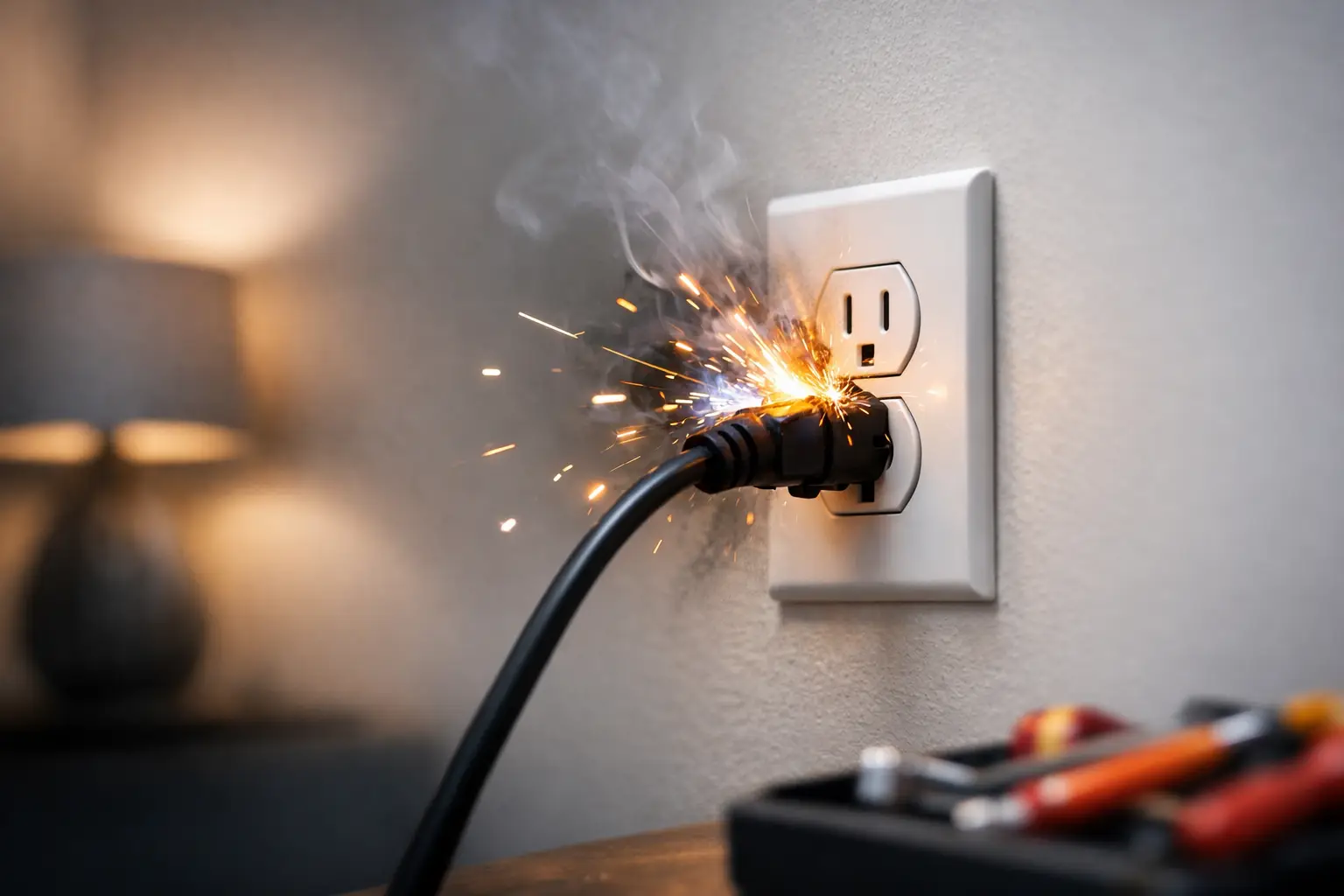
A quick blue flash when you plug in a lamp can be unsettling, especially if it happens in a busy kitchen, a child’s bedroom, or a rental property you manage. Outlet sparking causes range from a normal electrical connection being made to dangerous loose wiring, heat damage, or an overloaded circuit. The difference matters: a harmless one-time spark is not the same thing as a sparking outlet that needs immediate attention.
If an outlet sparks repeatedly, smells burnt, feels warm, makes a buzzing sound, or has discoloration around the cover, stop using it. Turn off the circuit breaker if you can do so safely, keep children and pets away from the outlet, and arrange professional electrical service. A small repair handled promptly can prevent damage to the outlet, wiring, and your home.
Electricity begins flowing the moment metal plug prongs touch the contacts inside an energized outlet. With certain appliances, that first connection can create a small, brief blue or white spark. This is more common with devices that draw power right away, such as a vacuum, space heater, hair dryer, microwave, power tool, or window air conditioner.
A normal spark should be tiny, happen only as the plug is inserted or removed, and disappear immediately. There should be no popping sound that continues, no smoke, no burning odor, and no heat at the outlet. The plug should also fit securely.
Even then, it is smart to switch high-draw appliances off before plugging them in or pulling them out. That reduces arcing at the outlet contacts and is easier on both the appliance cord and the receptacle.
The most concerning outlet sparking causes are usually related to worn parts, damaged connections, or a circuit carrying more power than it should. Homes in Silver Spring include many older properties with electrical components that may have seen decades of daily use. An outlet can look fine from the outside while its contacts or wire connections are loose behind the wall.
If a plug slips out easily, hangs downward, or feels loose when inserted, the outlet’s internal contacts may be worn. Loose contact creates resistance, and resistance creates heat. That heat can cause visible sparking, melting around the plug slots, or damage inside the electrical box.
Do not try to make a loose outlet work by bending plug prongs, pushing the plug in harder, or adding tape. Stop using the receptacle until it is replaced or repaired properly.
A wire connection can loosen over time because of age, vibration, previous work, or an improperly installed outlet. When electricity jumps across a gap at a loose connection, it can arc. Arcing produces heat and may leave black marks, make a crackling sound, or create a persistent burnt-plastic smell.
This is not a repair to ignore. The problem may be confined to one outlet, but it can also point to a damaged wire or connection elsewhere on the circuit. A qualified electrical professional should inspect the outlet and circuit rather than simply replacing the faceplate.
One outlet should not become the permanent power source for a television, game console, lamps, chargers, heater, air purifier, and several other devices. Power strips and extension cords are useful for temporary needs, but they can create trouble when they are overloaded, damaged, hidden under rugs, or connected to another power strip.
Heat-producing appliances deserve special attention. Portable heaters, toaster ovens, coffee makers, curling irons, and similar equipment can draw significant power. They should generally be plugged directly into a properly rated wall outlet, not into a lightweight extension cord or crowded power strip.
If sparking occurs when multiple devices are operating, unplug what you can and avoid resetting the breaker again and again. The circuit may need repair, a dedicated outlet, or a capacity upgrade based on how the room is actually used.
Sometimes the outlet is not the source of the problem. A frayed cord, bent plug prong, cracked plug body, or damaged appliance can spark as it makes contact. Check the plug and cord before using the device again. If the cord is hot, the insulation is split, or the prongs are blackened, replace or repair the appliance before plugging it into another outlet.
A useful test is to avoid experimenting with multiple outlets. If one appliance has a damaged plug, moving it from room to room can damage additional outlets or create a shock hazard.
Water and electricity do not mix. Bathrooms, kitchens, laundry rooms, garages, basements, and exterior outlets are especially vulnerable to moisture. A leaking shower faucet, a splash from a sink, condensation near a basement wall, or rain entering an outdoor cover can all lead to electrical trouble.
Outlets in areas exposed to moisture should have appropriate ground-fault circuit interrupter protection, commonly called GFCI protection. A GFCI is designed to shut off power quickly when it detects an electrical imbalance. If a bathroom, kitchen, garage, or outdoor outlet sparks or trips frequently, do not bypass the protection. Find and correct the moisture or wiring issue.
A replacement outlet, light switch, or remodeled room may have wiring mistakes hidden behind the wall. Incorrectly connected wires, mismatched electrical components, or an outlet installed without a secure box can create sparks and unreliable power. Problems sometimes show up right after a repair, but they can also take time to become visible.
If the outlet started sparking after painting, drywall work, appliance installation, a renovation, or water damage, mention that history when you schedule an inspection. Those details help narrow down the likely cause.
Your next step depends on what you see, hear, and smell. A single tiny spark from an otherwise secure outlet may simply call for more careful plug-in habits. Any sign of heat, repeated sparking, or damage deserves a faster response.
Take these safety steps:
Do not remove an outlet cover or reach into the box to look for the problem. Even with a breaker turned off, identifying the correct circuit and verifying that wires are de-energized requires the right tools and experience.
Some warning signs move this from a routine repair to an urgent electrical concern. Black or brown staining on the outlet cover, melted plastic, a hot plug, buzzing, breaker trips, shocks, or a burning odor all suggest overheating or arcing. The same is true if lights flicker when you use an appliance or if power comes and goes from the outlet.
Rental-property owners should treat these signs seriously between tenants as well. A loose outlet can go unnoticed until someone plugs in a high-draw appliance. Checking damaged, discolored, or loose receptacles during turnover work is a practical way to avoid a bigger maintenance call later.
An outlet that stops working after sparking should stay off limits. It may have tripped a breaker or GFCI, but resetting it without knowing why it tripped can put the problem right back into service.
Most outlet failures give some warning before they become severe. Replace loose or visibly damaged receptacles instead of living with them. Use outdoor-rated covers where weather is a concern, keep cords away from water and traffic paths, and avoid relying on extension cords as permanent wiring.
It also helps to match the outlet and circuit to the job. A home office packed with equipment, a workshop running power tools, or a kitchen with several countertop appliances may need more than a single overloaded receptacle can safely provide. Properly planned electrical repairs are safer and more convenient than a collection of adapters and power strips.
Handyman Services Silver Spring MD can help homeowners and property managers address related repair needs and coordinate dependable solutions when an electrical issue needs professional attention. If an outlet has sparked more than once or shows any sign of heat or damage, give it a break from service today. Prompt attention is the neighborly, practical choice that protects your property and the people inside it.

A single cracked bathroom tile…

A garage is often where…

A light that flickers every…

A kitchen can look dated…

A commercial door can look…

Contact Number
18004767078

Email ID
[email protected]