Give Us A Call! : 18004767078
Give Us A Call! : 18004767078

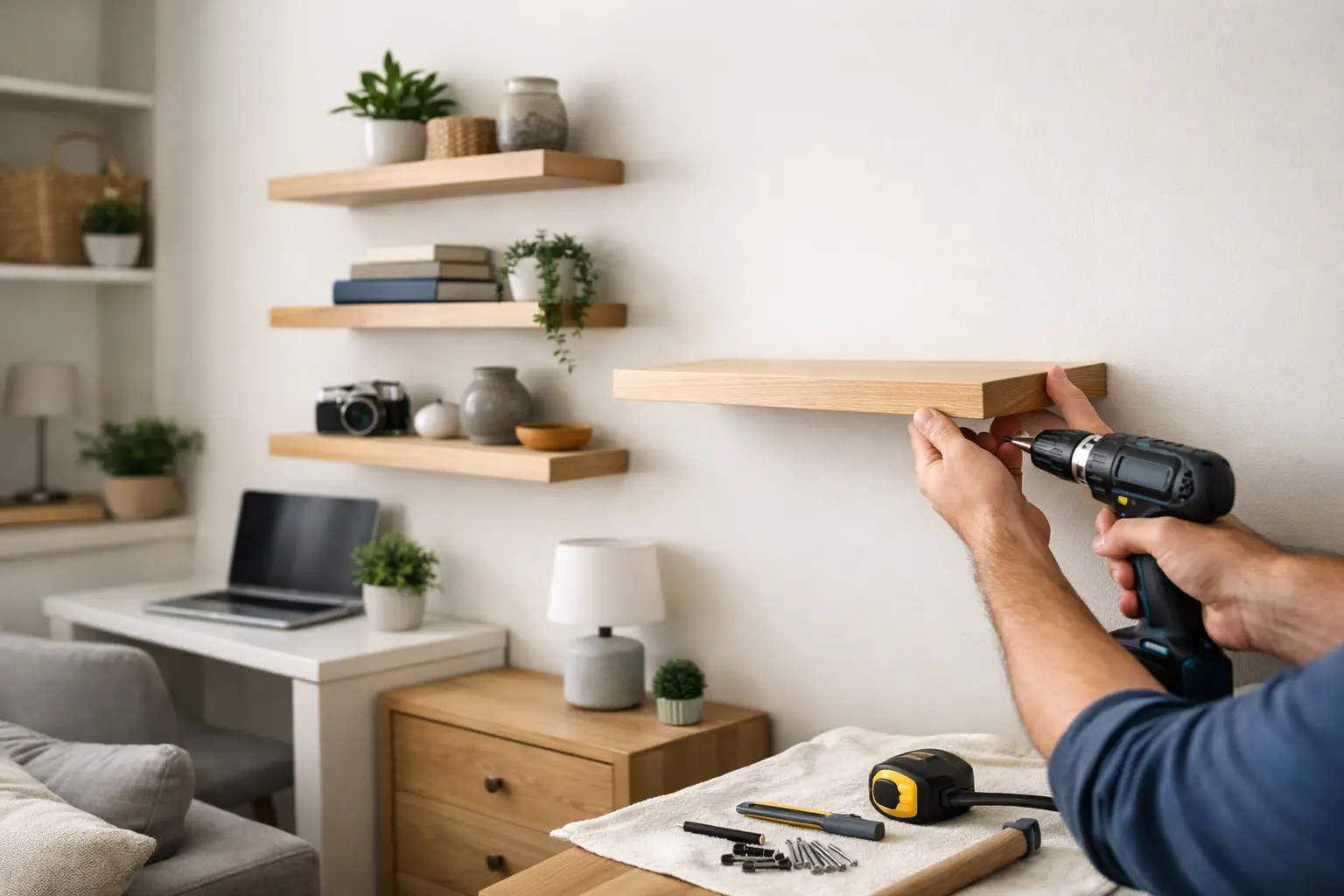
A crowded counter, an overstuffed closet, and nowhere to set the laundry supplies are usually not signs that your home is too small. More often, they are signs that the walls, corners, and awkward gaps are not doing enough work. Thoughtful shelving installation for small spaces can turn those overlooked areas into storage that is easy to reach, secure, and suited to the way your household actually lives.
For homeowners and landlords in Silver Spring, the goal is not to cover every wall with shelves. It is to create useful storage without making a room feel narrower, darker, or harder to clean. A well-placed shelf can clear the floor, organize daily essentials, and make a compact room feel far more functional.
Before choosing shelf boards or brackets, look at what is causing the clutter. A bathroom may need a place for towels and toiletries. A kitchen may need room for pantry staples, mugs, or small appliances. A small bedroom may need bookshelves that replace a bulky nightstand. The right shelf depends on the items it will carry, not just the empty wall space available.
Weight matters from the beginning. A shallow shelf holding a few framed photos has very different support needs than one holding cookbooks, canned goods, cleaning products, or power tools. This is where many do-it-yourself installations go wrong: the shelf looks level on day one but starts to pull away from the wall after regular use.
Also think about access. Storage only helps if people can use it without climbing on furniture, bumping into cabinet doors, or reaching over a crowded counter. In a narrow hallway, for example, a slim ledge for keys and mail may work better than deep shelving that catches shoulders as people pass.
Small homes and apartments often have more usable wall space than they appear to. The most effective locations tend to be spaces that are already underused rather than the main walls where furniture needs to sit.
The area above a doorway is a practical spot for items you do not need every day, such as extra linens, seasonal decor, or storage baskets. A shelf here should be installed carefully and kept proportional. If it extends too far from the wall, it can feel heavy and make a room look closed in.
Above a window, shelving can work in a home office, nursery, or bedroom, provided it does not interfere with blinds, curtains, or window operation. It is a good location for lighter items and decorative storage that keeps the room feeling personal.
Recessed shelving can be especially helpful in bathrooms, laundry areas, and entryways. Instead of projecting into the room, a recessed niche uses the depth inside a wall. It can hold toiletries near a shower, detergent beside a washer, or small everyday items by the front door.
This option requires more planning than surface-mounted shelves. Electrical wiring, plumbing, and wall framing may be inside that cavity. Cutting into a wall without checking first can create a much larger repair project. A professional can assess whether the location is safe and frame the opening properly for a clean finish.
The wall above a toilet is often wasted, yet it is a natural place for towels, toilet paper, and bathroom supplies. Open shelves keep frequently used items visible, while baskets can make the area look neater. Keep shelf edges high enough that no one bumps their head when standing up.
Likewise, the wall above a washer and dryer can hold detergents, stain removers, spare paper goods, and laundry baskets. In a tight laundry closet, custom shelves can be fitted around ducts, outlets, and plumbing rather than leaving those odd spaces empty.
Closets frequently need better organization, not simply more square footage. Adding shelves above the existing hanging rod creates space for bags, folded clothing, bedding, or labeled bins. Adjustable shelving is useful for rental properties and growing families because storage needs can change from year to year.
The space under a staircase can also hold shelves for shoes, books, cleaning supplies, or pet items. It depends on the height and shape of the area. In some homes, a few sturdy open shelves are enough. In others, built-in shelving or cabinet-style storage provides a more finished result.
Open shelving makes a small space feel less boxed in than bulky cabinets, but it also puts everything on display. If the shelf will hold mismatched containers, cleaning products, or household paperwork, use bins or baskets to keep visual clutter under control.
Floating shelves are popular because the brackets are hidden and the wall looks cleaner. They work well for lighter to moderate loads when they are mounted into solid framing or installed with the correct heavy-duty hardware. Their clean appearance does not mean they can be secured with a few basic drywall anchors and expected to hold a stack of dishes.
Bracketed shelves are often the better choice for heavier storage. The brackets are visible, but they provide dependable support and can complement the room when chosen in a simple finish. In a pantry, garage, laundry room, or utility closet, strength usually matters more than hiding the hardware.
Corner shelves can make a difficult room layout more useful. A compact corner in a bathroom or kitchen may not fit a cabinet, but it can hold a small shelf for soap, spices, or daily necessities. Just be realistic about depth. Deep corner shelves can become hard-to-reach drop zones for clutter.
A shelf is only as reliable as the wall attachment behind it. Drywall is a finish surface, not a structural support system. Whenever possible, shelf brackets and ledger boards should be fastened into wall studs. Studs provide the strength needed for common household loads and help prevent the shelf from sagging or pulling loose.
Sometimes the desired shelf location does not line up with studs. In that case, the correct solution depends on the shelf design, expected weight, wall condition, and hardware available. Heavy-duty anchors may be appropriate for lighter items, while a mounting board that spans several studs may be the safer way to support a heavier shelf. Masonry, plaster, tile, and metal-stud walls each require their own approach.
Level installation matters too. A shelf that is slightly out of level can cause books to slide, containers to lean, and the whole room to look unfinished. More importantly, a shelf that is poorly supported may fail without much warning. That risk is not worth taking near a crib, bed, doorway, or area where children and pets spend time.
Good shelving installation for small spaces considers what happens around the shelf every day. Check whether closet doors, cabinet doors, and appliances can still open fully. Make sure shelves near a stove are far enough from heat and splatter. In bathrooms, choose materials and finishes that can handle humidity rather than warping or rusting.
Lighting is another detail worth considering. A shelf installed too close above a counter can block existing light. In a dark closet or laundry room, adding a battery-operated or hardwired light beneath a shelf can make the storage far easier to use. If wiring is needed, it should be handled safely and according to local requirements.
For landlords, durable and easy-to-maintain shelving is usually the smartest investment. Simple adjustable systems, solid brackets, and washable finishes can stand up to tenant turnover better than fragile decorative shelves. For homeowners, custom sizing may be worth it when a narrow alcove or uneven wall is the only available storage area.
A basic lightweight shelf can be a manageable weekend project if you have the right tools, know where the studs are, and understand the limits of your wall anchors. But it is wise to call a handyman when shelves need to carry significant weight, fit around plumbing or electrical components, be installed in tile or masonry, or match existing trim and cabinetry.
Professional help also makes sense when one storage issue leads to several small repairs. Maybe the closet needs new shelving, the sliding door is sticking, the wall has old anchor holes, and the room could use touch-up paint afterward. Handyman Services Silver Spring MD can help coordinate those practical improvements so the finished space looks cared for rather than pieced together.
The best shelf is not the one with the most storage. It is the one that makes the items you use easier to find, keeps walkways clear, and stays firmly in place long after the room has changed around it.

A single cracked bathroom tile…

A garage is often where…

A light that flickers every…

A kitchen can look dated…

A commercial door can look…

Contact Number
18004767078

Email ID
[email protected]