Give Us A Call! : 18004767078
Give Us A Call! : 18004767078

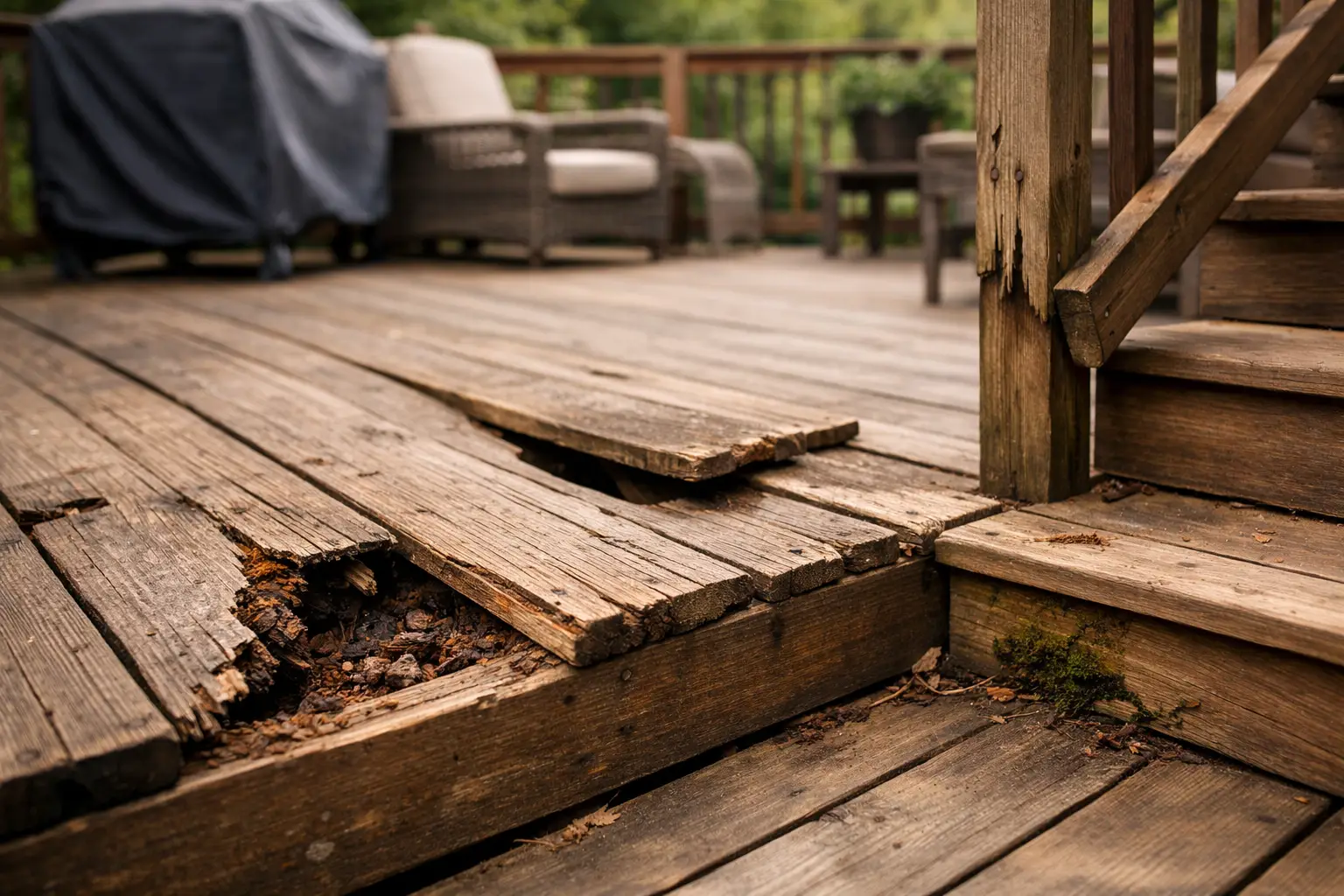
A deck can look fine from the yard and still have a serious problem underfoot. One board may feel a little springy, a railing may wobble when someone leans on it, or the steps may start to shift after a wet Silver Spring season. Those are not minor annoyances to ignore. Knowing the top signs of deck damage helps homeowners and landlords address repairs before a casual cookout, tenant visit, or family gathering turns into a safety concern.
Walk slowly across the deck and pay attention to how each area feels. Boards that flex too much, feel soft under a shoe, or dip when weight is applied may have moisture damage or rot below the surface. Wood can decay from the underside first, so a board does not have to look badly weathered from above to be unsafe.
Cracks are also worth a closer look. Small surface checking is common as outdoor lumber expands and contracts, especially on older decks. But deep splits, cracks around screws, or boards breaking apart at the ends can mean the wood is no longer dependable. Individual damaged boards can often be replaced, but widespread soft spots call for a more complete inspection of the framing.
A deck railing should feel solid when you apply firm pressure. It should not sway, rattle, pull away from the deck, or move at the post connections. Railings are a key safety feature, particularly where a deck is elevated, and even a small amount of movement can point to loose fasteners, deteriorated wood, or a weakened post base.
Stairs deserve the same attention. Watch for steps that rock, loose handrails, cracked stringers along the sides of the stairs, and treads that have begun to pull away. A stair repair may be straightforward when handled early. Waiting can allow water and foot traffic to damage the supporting pieces as well.
Nails, screws, bolts, joist hangers, and brackets hold a deck together. If fasteners are heavily rusted, backed out, missing, or surrounded by split wood, the connection may not be doing its job. This is especially concerning around ledger boards, posts, railings, stairs, and beams.
Not every rusty screw means the deck is about to fail. Light surface rust on a few exposed fasteners may be a maintenance issue. Deep corrosion, however, can reduce holding strength, while loose hardware often signals movement or moisture problems that need to be corrected rather than simply covered up.
Deck posts are often most vulnerable near the soil, concrete footings, or places where water collects. Probe the lower portion of each post gently with a screwdriver. Wood that flakes, crumbles, feels soft, or has dark, damp-looking sections may be decaying.
Post damage can be easy to miss because landscaping, mulch, or stored items may hide the lower section. Clear those areas periodically so you can see what is happening. A post that has shifted, leaned, or separated from its base needs prompt professional attention, since it supports a significant portion of the deck’s weight.
The most costly deck issues are often underneath. If the area is accessible, use a flashlight to inspect the joists, beams, support posts, and connections. Look for sagging wood, cracked beams, dark water stains, insect activity, rusted metal connectors, or areas where framing members have started to separate.
A level deck surface does not stay level by accident. If you notice a low area where water puddles, a section that slopes, or an overall sag in the middle, there may be a framing issue below. Sagging can result from undersized or damaged joists, failing beams, weakened posts, or shifting footings.
A few boards sitting unevenly may simply need refastening or replacement. A larger dip across several boards is different. It can indicate that the structure beneath them needs repair, and adding new surface boards alone will not solve the cause.
Maryland’s rain, humidity, snow, and freeze-thaw cycles can be hard on outdoor wood. Water that sits on boards or stays trapped beneath the deck creates conditions for rot and mildew. Green or black buildup, persistent damp spots, peeling stain, and areas that take much longer to dry are all signals to investigate.
The solution depends on the source. Sometimes the deck needs cleaning and resealing. In other cases, blocked gaps between boards, a damaged gutter, poor grading, or dense vegetation is holding moisture where it should not be. Fixing drainage and airflow protects any repairs you make later.
Termites, carpenter ants, and other wood-damaging insects can affect exterior structures. Small holes, tunnels, hollow-sounding wood, piles of fine sawdust-like material, or insect wings near the deck may require attention. Insects are not always the cause of a damaged deck, but moisture-softened wood is more inviting to them.
If you suspect active pests, have that issue evaluated along with the deck repair. Replacing boards without addressing the underlying moisture or pest problem can lead to the same damage returning.
The ledger board is the piece that attaches the deck to the house. It is one of the most important structural connections on many decks, and trouble here should never be treated as a cosmetic issue.
Look for gaps between the deck and house, rusted or missing attachment hardware, cracked siding nearby, or water entering around the connection. Flashing should direct water away from the house and the ledger. When flashing is missing or damaged, moisture can affect both the deck framing and the home’s exterior wall.
Because this area involves the structure of the home, a professional inspection is the sensible next step if anything looks loose, separated, or water-damaged. This is not a repair to guess at with a few extra screws.
A damaged deck does not automatically need to be torn down. If the frame, beams, posts, and house connection are sound, replacing worn boards, tightening railings, repairing stairs, and renewing the protective finish may extend its useful life. This is often the practical choice for a deck with localized wear.
Replacement becomes more likely when rot affects multiple framing members, support posts are compromised, the deck has major movement, or older construction no longer provides a safe foundation for the repairs needed. Material choice matters too. Pressure-treated lumber, cedar, composite boards, and other options have different costs, maintenance needs, and appearances. The right answer depends on the condition of the existing structure and how the deck is used.
For a rental property, timely repairs also help prevent small maintenance complaints from becoming liability concerns. For a homeowner, they protect the space where people naturally gather. Either way, documenting visible issues and scheduling an assessment early is usually easier than dealing with a sudden failure.
Avoid placing heavy furniture, grills, planters, or large groups of people on an area that feels soft or unstable. Do not rely on stain, paint, or a surface patch to strengthen rotted wood. A fresh coat of color can improve appearance, but it cannot restore structural strength.
Take clear photos of the affected boards, railings, stairs, posts, and connections. That makes it easier to explain the problem and track whether it is getting worse. Then arrange for a qualified repair professional to assess what is cosmetic, what can be repaired, and what needs immediate attention.
Handyman Services Silver Spring MD helps local homeowners and property owners with practical deck repairs, carpentry work, railings, stairs, fence repairs, and exterior maintenance. A careful evaluation can separate a simple board replacement from a condition that requires deeper structural work.
Your deck should feel like an easy place to step outside, not a part of the home everyone avoids. If something feels loose, soft, uneven, or unsafe, giving it attention now can help keep the space ready for the people who use it most.

A single cracked bathroom tile…

A garage is often where…

A light that flickers every…

A kitchen can look dated…

A commercial door can look…

Contact Number
18004767078

Email ID
[email protected]