Give Us A Call! : 18004767078
Give Us A Call! : 18004767078

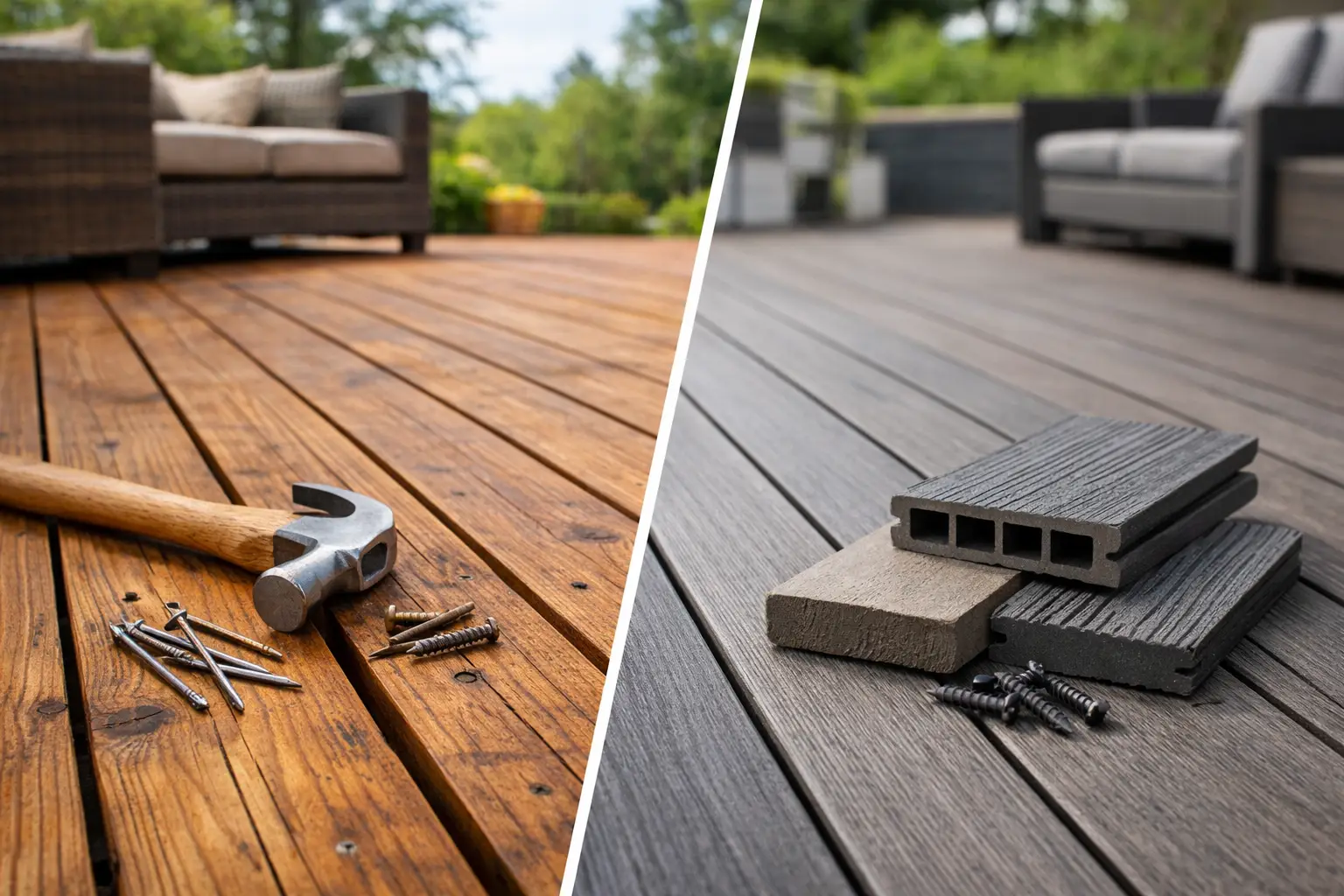
A new deck has to work harder in Silver Spring than it does in a showroom. It faces humid summers, wet springs, falling leaves, icy spells, muddy shoes, cookouts, and daily use by kids, pets, tenants, or guests. When weighing a wood deck versus composite decking, the better choice is not always the material with the lowest price tag or the one with the longest warranty. It is the one that fits how you plan to use and maintain your outdoor space.
For some homeowners, the warm look and repairable nature of real wood are worth regular upkeep. For others, especially busy families and landlords managing several maintenance needs, composite is a practical way to reduce sanding, staining, and repeated board replacement. Here is how to make the decision with clear expectations from the start.
A wood deck uses natural lumber, most commonly pressure-treated pine, cedar, or a hardwood option. Pressure-treated lumber remains a popular choice because it is widely available, structurally strong, and generally costs less upfront. Cedar has a more refined natural appearance and better resistance to insects and rot than untreated lumber, but it still needs protection from moisture and sun.
Composite decking is made from a blend of recycled wood fibers and plastic. Many current composite boards have a protective outer cap that helps resist moisture, fading, stains, and surface damage. The boards are designed to look like wood but do not behave exactly like wood. They do not need staining, and they will not splinter in the same way natural boards can.
Neither option is maintenance-free, and neither fixes problems in the deck framing below. A beautiful new surface cannot make up for loose posts, poor drainage, undersized footings, or a ledger board that was not properly attached to the home. Before choosing boards, make sure the deck structure is safe, sound, and appropriate for the project.
Wood usually wins the first-round price comparison. Pressure-treated lumber can make a new deck or surface replacement more affordable, particularly for a larger backyard or rental property where keeping initial costs controlled matters. It is also easy to cut and install, which may reduce labor time on straightforward designs.
Composite decking typically costs more per board, and the hardware and trim pieces may add to the initial investment. If you are replacing a deck surface, the existing framing may need adjustment because composite boards can have different spacing and support requirements than wood. That extra preparation should be included in the estimate rather than discovered halfway through the work.
The long-term calculation shifts when maintenance is included. A wood deck may need periodic cleaning, sealing, staining, or painting. Boards can crack, cup, rot, or loosen over time, especially in shaded areas that stay damp. Composite requires regular washing and occasional cleaning for pollen, grime, mildew, and food spills, but it does not require stain or sealant.
For a homeowner who enjoys hands-on outdoor maintenance, wood can remain a smart value. For a landlord or a busy household that would rather not schedule deck finishing every few years, composite can justify its higher purchase price through reduced recurring work.
Maryland weather creates a demanding mix of moisture and temperature changes. Rain and humidity encourage mildew and can keep leaf debris wet against deck boards. Winter freezing and thawing can push moisture into small cracks, while summer sun can dry and fade exposed surfaces.
Wood absorbs moisture. That is part of its natural character, but it is also why consistent care matters. Without proper sealing and drainage, boards may swell, split, warp, or develop soft areas. Pressure-treated lumber has protection against decay and insects, but it is not immune to weathering. It still benefits from cleaning and a suitable water-repellent finish after it has dried sufficiently.
Composite resists water absorption much better than wood, making it especially appealing near shaded yards, pool areas, or spots where rainwater tends to linger. It can still develop surface mildew when pollen, dirt, and moisture are left in place. A composite deck needs airflow underneath and proper gaps between boards so water can drain rather than collect.
Sun exposure deserves attention, too. Dark composite colors can get noticeably hot under bare feet during a bright Maryland afternoon. Some wood species and darker stains can also heat up, but composite often holds more heat. If your deck receives direct afternoon sun and is used by children, pets, or anyone who likes to go barefoot, discuss lighter colors and request a sample board before making the final selection.
Wood offers a natural grain, variation, and warmth that many homeowners simply prefer. Each board has its own character, and a stained wood deck can be refreshed with a different color when your exterior style changes. Wood also has a familiar feel underfoot and is generally easier to repair one board at a time when damage occurs.
Composite provides a more uniform appearance. Modern products come in colors and textures that closely resemble wood, from soft gray to deeper brown tones. Hidden fasteners can create a clean surface without visible screw heads, which many homeowners like for entertaining areas.
The trade-off is that composite can look repetitive if the color or grain pattern does not suit the house. It may also scratch from dragged furniture, grills, or heavy planters. While many capped boards resist stains well, grease and spilled food should still be cleaned promptly. With wood, scratches can often blend into the weathered surface or be addressed during refinishing. With composite, repairs may require replacing a board, and color matching older material can be difficult if the product has faded or been discontinued.
A wood deck asks for active care. At minimum, plan to sweep leaves and debris, wash away dirt and mildew, inspect fasteners and railings, and monitor for splinters or damaged boards. Depending on the wood, exposure, and finish, you may need to seal, stain, or paint it on a regular schedule. Skipping that work for too long often turns a simple maintenance visit into a larger deck repair.
Composite is lower maintenance, not no maintenance. Keep gaps clear, clean the surface according to the manufacturer guidance, and do not allow wet leaves, planters, or outdoor rugs to trap moisture for long periods. Check railings, stairs, hardware, and framing just as you would with a wood deck. Those components still need attention regardless of what the walking surface is made from.
If you already have a wood deck and it is looking tired, do not assume replacement is the only answer. A professional inspection can determine whether the problem is surface-level weathering, isolated board damage, loose railings, or deeper structural deterioration. In some cases, targeted repairs and refinishing are the sensible choice. In others, resurfacing with new wood or composite boards can extend the life of sound framing.
Choose wood when you want the lowest initial material cost, value the appearance of real lumber, and are prepared to keep up with periodic finishing. It is also a flexible option when matching an existing wood porch, fence, or exterior trim matters.
Choose composite when reducing routine staining and sealing is a priority, when moisture resistance is a major concern, or when you want a consistent finished look for years to come. It can be especially useful for rental properties and households where weekend maintenance time is already claimed by work, family, and other home repairs.
The decision also depends on the deck design. A small entry deck may not need a premium product to do its job well. A large rear deck connected to a kitchen, used for frequent entertaining, may be worth a longer-term investment in composite. If the deck includes stairs, railings, built-in seating, lighting, or uneven ground conditions, the quality of the installation matters as much as the board material.
Before ordering materials, think about shade, sunlight, drainage, foot traffic, budget, and how much maintenance you realistically want to handle. A dependable deck plan accounts for all of those details, not just the color of the boards. Handyman Services Silver Spring MD can help homeowners and property owners assess worn deck boards, repairs, framing concerns, and replacement options so the finished space is safe, useful, and ready for the seasons ahead.

A countertop takes more daily…

A single cracked bathroom tile…

A garage is often where…

A light that flickers every…

A kitchen can look dated…

Contact Number
18004767078

Email ID
[email protected]