Give Us A Call! : 18004767078
Give Us A Call! : 18004767078

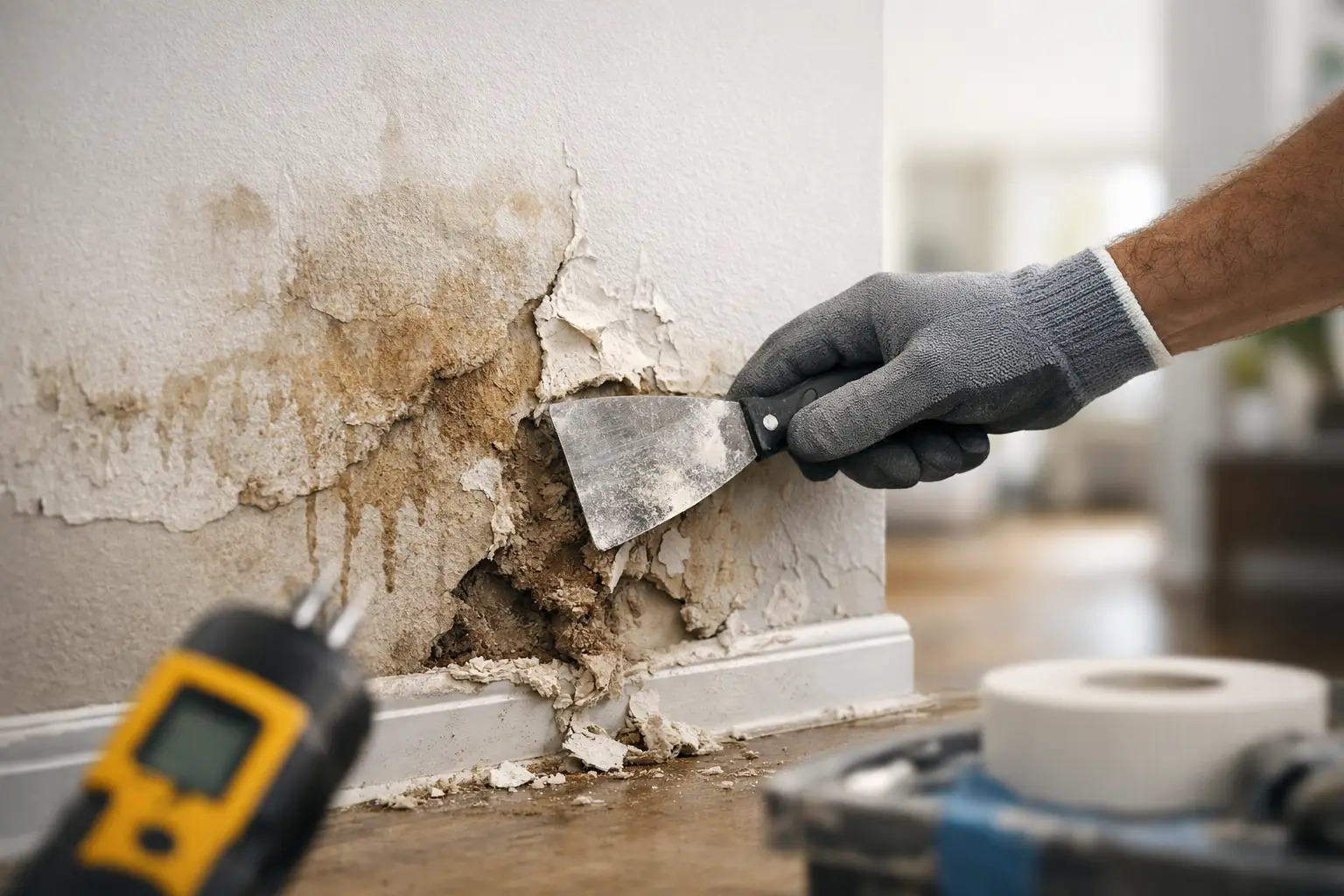
A brown ring spreading across the ceiling, a wall that feels soft near the baseboard, or paint that suddenly bubbles is more than a cosmetic problem. Water damaged drywall repair begins by finding where the water came from and stopping it. Painting over the stain may hide it for a while, but it will not fix weakened drywall, trapped moisture, or the leak behind it.
For homeowners and landlords in Silver Spring, a damaged wall can come from a slow plumbing leak, an overflowing upstairs tub, a roof issue after heavy rain, a failing appliance hose, or moisture entering a basement. The right repair depends on how much water reached the drywall, how long it stayed wet, and whether the wall framing and insulation are still dry and sound.
The first job is not patching drywall. It is stopping the source. Shut off the water supply if a pipe, toilet, sink, or appliance is leaking. Put a container under an active drip when possible, and move furniture, rugs, and belongings away from the affected area. If water is near outlets, switches, light fixtures, or electrical wiring, turn off power to that area at the breaker and avoid touching wet electrical components.
A ceiling stain deserves quick attention, especially below a bathroom or under a roof valley. Water can travel along framing before it shows itself, so the visible stain is not always directly below the leak. A repair that skips leak detection can lead to another damaged ceiling only weeks later.
After the source is controlled, ventilation and drying matter. Fans, dehumidifiers, and open access to the wet area can help with a small, clean-water incident. Drying should start promptly. Drywall is made with a gypsum core and paper facing, and prolonged moisture can cause the paper to separate, the board to swell, and mold to grow.
Not every water mark means an entire wall must come down. A small stain from a repaired leak may only need sealing and repainting once the area is completely dry. However, drywall that has absorbed too much water usually cannot be restored with spackle and paint alone.
Watch for these signs that replacement is the safer, longer-lasting choice:
A sagging ceiling is a priority repair. It may be carrying more water than it appears to be, and the material can fail without much warning. Keep people and pets out from under the affected area until it can be inspected and safely opened.
The type of water also matters. Clean water from a supply line is different from water from a backed-up drain, sewage line, or outdoor flooding. Contaminated water can carry bacteria and other hazards. In those situations, porous materials such as drywall, insulation, carpet padding, and some trim often need to be removed rather than dried in place.
A durable repair is a process, not just a patch. First, the damaged area is inspected to determine the source and extent of the moisture. A small leak behind a vanity might affect only a limited section of drywall. A burst pipe or long-term roof leak may require opening a larger area so hidden wet insulation, framing, and plumbing can be checked.
Damaged drywall is cut back to solid, dry material. Cutting to clean, straight edges makes the new piece easier to secure and finish. If insulation inside the wall is wet, it should be evaluated and replaced when necessary. The framing needs time to dry before new drywall covers it. Closing a wall too soon traps moisture where it can create odor, staining, rot, or mold problems later.
Once the cavity is dry and sound, new drywall is installed, taped, and finished with joint compound. The repaired surface is sanded smooth, primed with a stain-blocking primer where needed, and painted to match the surrounding wall or ceiling. Baseboards, trim, and damaged caulk may also need repair or replacement.
Matching texture can be the detail that separates a repair from an obvious patch. Smooth walls are generally straightforward, while knockdown, orange-peel, or hand-applied ceiling textures require more care. On older walls, paint color can also vary from sun exposure and past touch-ups. Sometimes painting the full wall is the best way to achieve an even finish instead of leaving a visible rectangle around the repair.
A homeowner may be able to handle a very small repair when the leak has already been fixed, the drywall is fully dry, and the damage is limited to a minor surface stain or a small hole made during inspection. That can involve light sanding, stain-blocking primer, a small amount of patching compound, and paint.
The trade-off is that a wall can look dry while moisture remains inside. DIY work is less suitable when drywall feels soft, a ceiling is involved, mold is visible, insulation may be wet, or the source of the leak is uncertain. It is also wise to bring in help when water has affected several rooms, hardwood flooring, electrical areas, or a rental property where a quick, documented repair protects both the building and its occupants.
Many drywall repairs start with a maintenance issue that was easy to miss. Check under sinks, around toilets, behind washing machines, and near water heaters for slow drips or discoloration. Replace worn supply hoses before they fail, keep gutters moving water away from the roofline, and address cracked caulk around tubs and showers before water reaches the wall behind them.
Landlords and property managers can avoid larger repair calls by responding quickly when tenants report a stain, damp carpet, a loose toilet, or a musty smell. Small plumbing repairs are usually far less disruptive than replacing drywall, insulation, trim, and flooring after a leak has spread.
Basements deserve regular attention as well. During periods of heavy rain, inspect foundation walls, window wells, sump pump areas, and lower-level finished rooms. A recurring damp spot is a signal to investigate drainage, exterior grading, or a foundation entry point rather than repeatedly repainting the same area.
Need repair to a water-stained ceiling, soft bathroom wall, or damaged drywall after a leak? Handyman Services Silver Spring MD can help assess the damage, complete drywall and paint repairs, and coordinate the practical fixes needed to get your space back in shape. For active leaks, plumbing concerns, or suspected electrical exposure, address the immediate hazard first and schedule repair work once the area is safe to inspect.
A dry, solid wall is worth protecting. Taking care of the leak and the damaged material now can keep a small household problem from becoming a larger repair later.

A key that will not…

A front-door key that gets…

The best lockout response example…

A car lockout rarely happens…

A leaning fence can make…

Contact Number
18004767078

Email ID
[email protected]